
Last Updated: March 29, 2026 – By Dr. Sarah Missaoui, DVM
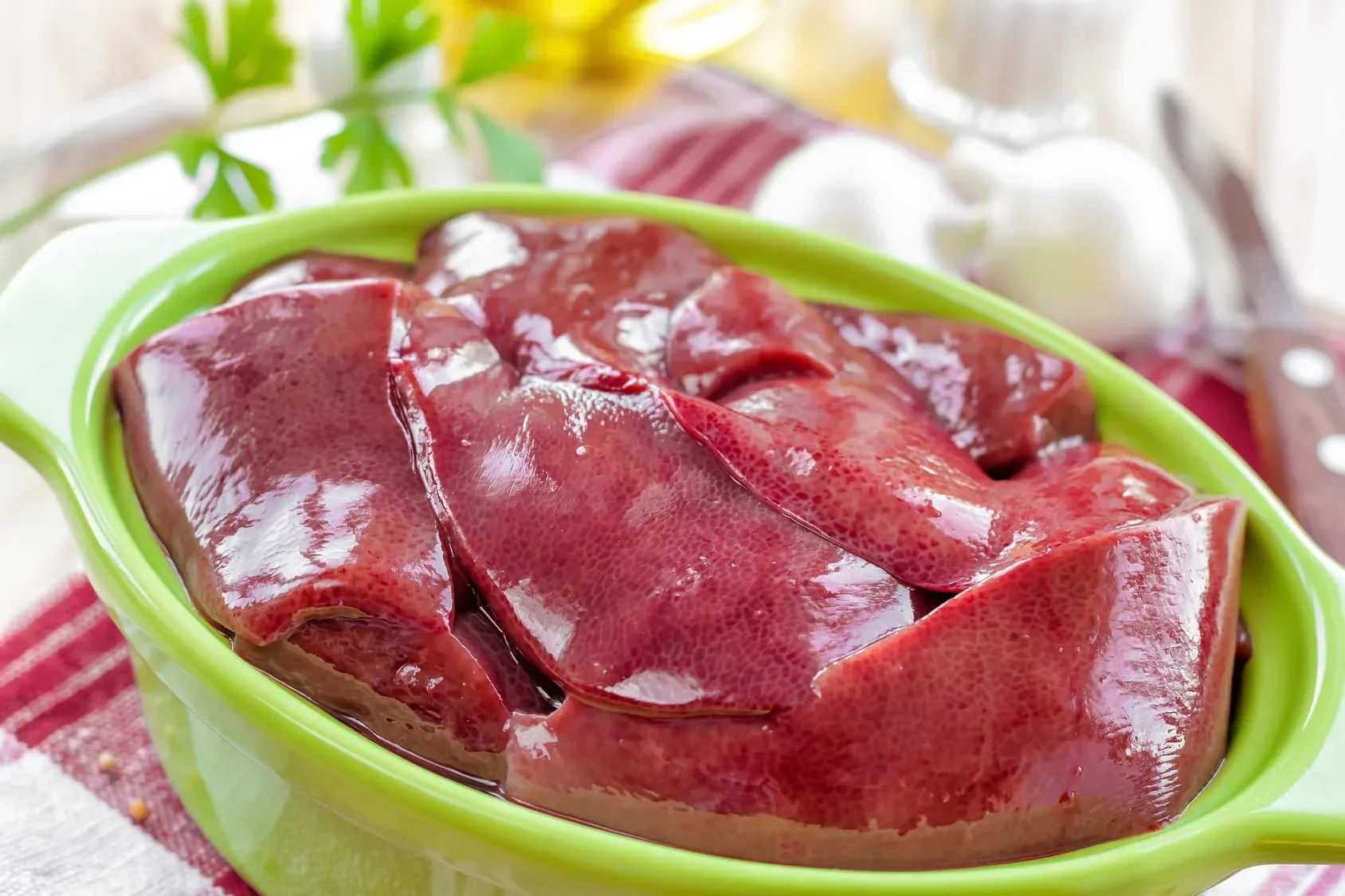
NRC 2006 sets a Tolerable Upper Intake for vitamin A (retinol), and liver is the most concentrated retinol source in most raw diets. As a defensible starting point, limit liver to approximately 5% of total weekly food intake by weight – across all species combined – then verify the full recipe against NRC 2006 targets. Retinol accumulates in fat tissue; it is one of the few raw ingredients where gradual is always correct.
What are the Liver Requirements and Why do They Matter?
Liver is one of the most nutrient-dense foods in common raw diets. It contributes vitamin A (retinol), copper, and B-vitamins. Because it's concentrated, portion size matters — the daily raw food amount calculator checks vitamin A against NRC limits.
Retinol is fat-soluble and can accumulate over time. If you suspect your dog is sensitive (breed predisposition, medical history, abnormal labs), get veterinary guidance before changing liver amounts.
A simple way to think about liver amounts
- Start conservative and keep the baseline stable for a couple of weeks.
- Small dogs overshoot faster because the same gram change is a bigger percentage of intake.
- Higher liver portions raise vitamin A load over time; if you're unsure, treat it as a reason to re-check the whole recipe (and use veterinary guidance if risk is higher).
Why liver portions feel high-stakes
If you've been digging into raw feeding, you've probably already hit this pattern:
Liver feeding comes down to a simple question: how much is enough and how much is too much.
Liver questions feel high-stakes because the range is narrower. It can help close nutrient gaps, but it can also overshoot for some dogs if you push portions aggressively.
You need a conservative starting point and a way to review the full recipe.
NRC 2006 is a reference frame. Use it as context while you choose liver amounts that fit the full recipe and your dog's history.
Vitamin A is fat-soluble and can accumulate over time. If you're feeding higher-liver recipes, or your dog has a history that raises concern (abnormal labs, breed risk, meds), discuss targets and monitoring with your veterinarian.
How to adjust liver without guessing
Weigh what you feed. Especially in small dogs, 'a little extra' can be a big swing over time.
Keep changes small and spaced out. Hold the rest of the recipe stable so you can interpret stool/appetite changes instead of chasing multiple variables.
Use organs as structure, not a magic ratio. Liver plus other secreting organs is a common framework; the full recipe still determines whether vitamin A/copper trends are appropriate for the dog.
Common questions (kept short)
Can a dog eat too much liver?
Yes. Liver is dense in vitamin A (retinol), which can accumulate over time. The risk depends on portion size, the rest of the diet, and the dog. If you feed higher liver amounts, keep the recipe reviewable and discuss monitoring with your veterinarian.
Is beef liver better than chicken liver?
It depends on what you are trying to correct and the dog's history. Nutrient density can differ by species and cut, so treat liver choice as one input and review the full recipe (and any relevant lab context) with your veterinarian.
Can I cook the liver for my raw diet?
If your dog refuses liver, try tiny amounts mixed into a larger batch, lightly sear the outside, or use small diced pieces. If you cook it, avoid overcooking and keep the rest of the recipe consistent.
Frequently Asked Questions
What are the signs of Vitamin A toxicity in dogs?
Hypervitaminosis A is a chronic risk when vitamin A intake stays high for long periods. Possible signs include stiffness or reluctance to jump, but those signs have many causes. If you suspect a problem, involve your veterinarian and review the full diet rather than guessing from symptoms alone.
Why is beef liver superior for copper levels?
Copper content varies by species and cut. If copper is a concern (either too low or too high), treat liver choice as one input and evaluate the full recipe and your dog's history with your veterinarian.
Can I rotate liver with other organs for the 10% target?
Many raw frameworks split organs into liver plus other secreting organs. Heart is not one of those � beef heart in raw dog food counts as muscle meat, not organ. Treat any liver-and-organ split as a starting structure, then adjust based on the full recipe and your dog's tolerance.
Sources & References
- National Research Council. (2006). Nutrient Requirements of Dogs and Cats. Washington, DC: The National Academies Press. View Publication →
- Merck Veterinary Manual. Nutritional Requirements of Small Animals (liver feeding and vitamin A toxicity context). Merck Veterinary Manual →
- USDA FoodData Central. Food nutrient data (use when you need numeric liver and organ estimates). FoodData Central →
- Dillitzer N, Becker N, Kienzle E. (2011). Intake of minerals, trace elements and vitamins in bone and raw food rations in adult dogs. British Journal of Nutrition, 106(S1), S190–S192. DOI →
- FEDIAF. (2024, updated 2025). Nutritional Guidelines for Complete and Complementary Pet Food for Cats and Dogs. Brussels, Belgium: European Pet Food Industry Federation. View Guidelines →