
Last Updated: March 29, 2026 – By Dr. Sarah Missaoui, DVM
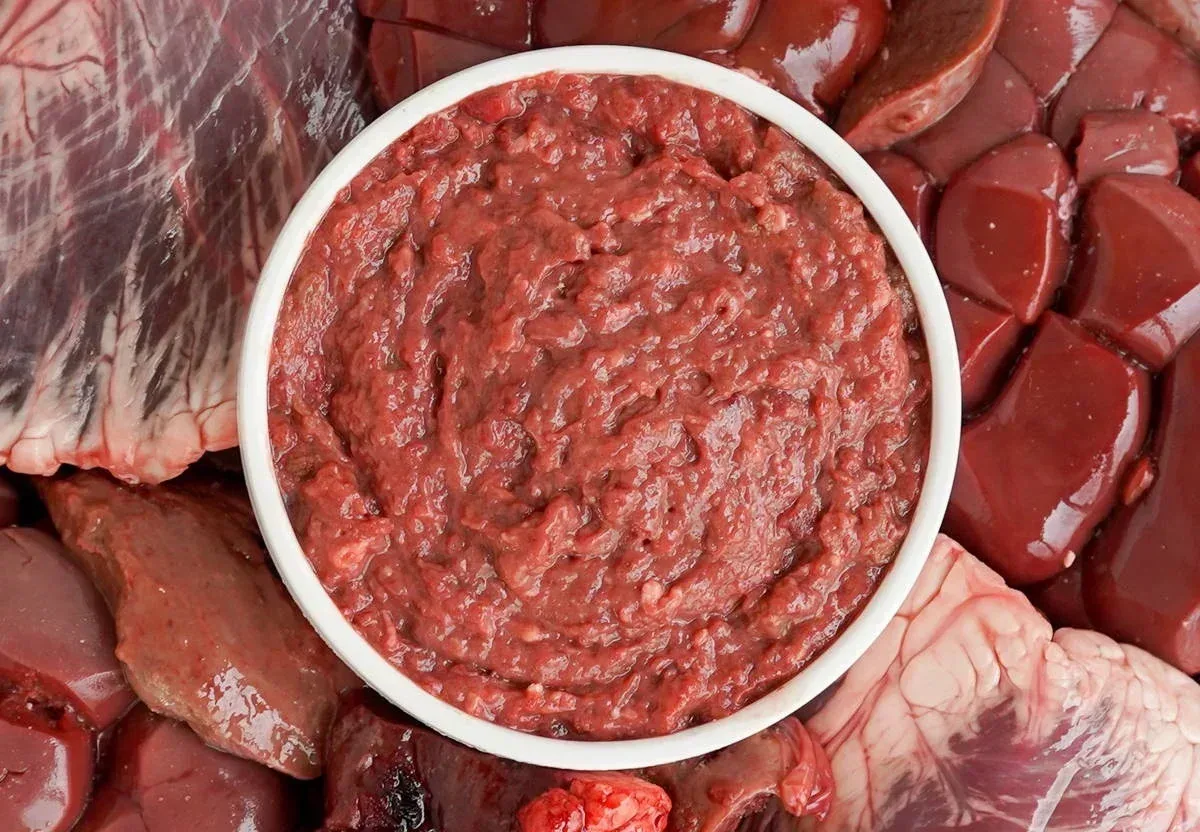
The 10% organ target in 80/10/10 is a structural placeholder, not an NRC 2006 recommendation. Fat-soluble vitamins (A, D, K) and trace minerals (copper, zinc, manganese) shift significantly depending on which organs you include and in what ratio. A recipe built to NRC 2006 targets will have a different organ percentage for every dog – not a fixed number. Check yours with the raw dog food calculator.
What Is the Organ Meat Ratio and Why Does It Matter?
Organ meats are nutrient-dense. They can help cover vitamin A, copper, B12, and more - but they can also overshoot if you treat them like a free 'bonus.'
A practical starting structure (not a promise)
- Liver: nutrient-dense; start conservative and adjust based on the full recipe (vitamin A/copper trend).
- Other secreting organs (kidney/spleen/pancreas): useful for diversity; rotate slowly and re-check totals.
- Heart (beef heart in raw dog food): muscle tissue, not a secreting organ � it belongs in the 80% muscle portion and can contribute taurine without replacing liver.
Why organ ratios feel risky
If you've been digging into raw feeding, you've probably already hit this pattern:
Organ meat ratios are one of the most debated topics in raw feeding, and the answer depends on your specific dog's needs.
Organ math feels risky because the margin is smaller. Small dogs and growing dogs can overshoot vitamin A or copper faster than you expect.
What helps is a cautious opening amount paired with a way to check the whole recipe.
NRC 2006 is a reference frame. Use it to keep organ choices grounded and to avoid repeating the same imbalances week after week.
Vitamin A is fat-soluble. Your dog's body can store excess over time. Chronic overfeeding of liver can contribute to problems, especially in small dogs or sensitive individuals. skeletal issues and other issues. Aim for consistency and make changes gradually.
If you want a simple start, use a repeatable structure and adjust with the full recipe in view.
How to adjust organs without chasing a 'perfect ratio'
Start conservative. Keep your baseline stable for a couple of weeks before making another change.
Change one variable at a time. If you rotate organs, do it slowly so you can tell what changed stool, itch, or appetite.
Use the full recipe as the scoreboard. Organ percentages are only structure; nutrient coverage depends on what else is in the bowl.
Common questions (kept short)
Does spleen carry a toxicity risk similar to liver in raw feeding?
Spleen is often used as an iron-dense secreting organ. It does not carry the same vitamin A accumulation concern as liver, but any organ choice should still be evaluated in the context of the full diet and the dog.
Which species liver provides the highest CoQ10 concentration in raw feeding?
CoQ10 content varies by species and cut. If you care about CoQ10, treat it as one detail - focus first on the full recipe and consistency, then refine.
Is it better to feed organs from one species or rotate species monthly?
Rotating species can improve diversity, but it's not mandatory. If you rotate, do it slowly and watch tolerance. Keep the focus on nutrient coverage and consistency, not a rigid schedule.
Is heart muscle or organ?
Beef heart is muscle tissue, not a secreting organ � it belongs in the 80% muscle portion, not the 10% organ allowance reserved for liver and kidney. Where heart fits in your recipe is covered in our beef heart NRC nutrition guide.
What if my dog dislikes liver?
Try tiny amounts mixed into a larger batch, use small diced pieces, or use a small topper to improve acceptance. If your dog consistently refuses liver, work with your vet on safer alternatives.
Can I swap kidney for pancreas?
Yes, but the nutrient profile shifts. Both are secreting organs and each has strengths. If you swap, re-check the full recipe and adjust gradually.
Sources & References
- National Research Council. (2006). Nutrient Requirements of Dogs and Cats. Washington, DC: The National Academies Press. View Publication →
- Dillitzer N, Becker N, Kienzle E. (2011). Intake of minerals, trace elements and vitamins in bone and raw food rations in adult dogs. British Journal of Nutrition, 106(S1), S190–S192. DOI →
- USDA FoodData Central. Food nutrient data (use when you need numeric organ and liver estimates). FoodData Central →
- Merck Veterinary Manual. Nutritional Requirements of Small Animals (liver feeding and vitamin A toxicity context). Merck Veterinary Manual →