
Last Updated: March 29, 2026 ô By Dr. Sarah Missaoui, DVM
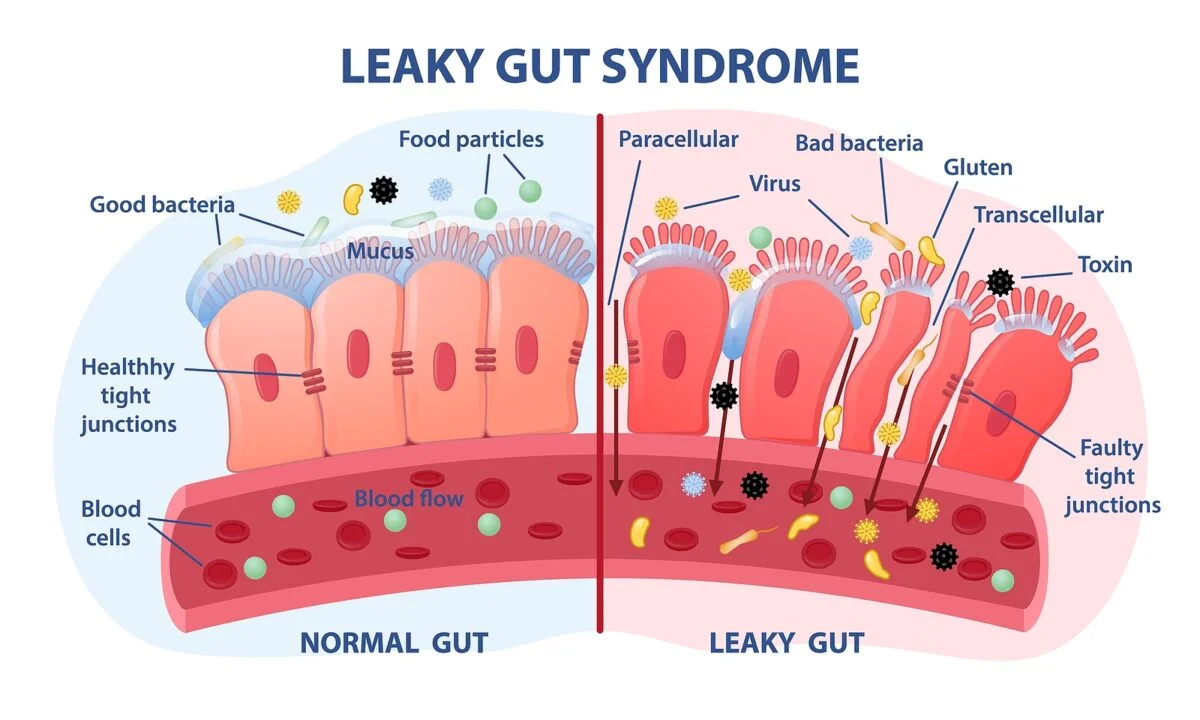
'Leaky gut' is confirmed by elevated faecal calprotectin or albumin loss ô not by coat changes or loose stool alone. The symptoms overlap with IBD, food-responsive enteropathy, parasites, and infection; treat leaky gut as a working hypothesis, not a conclusion. If your dog has chronic diarrhea, weight loss, blood in stool, or severe itch, involve your veterinarian before changing the diet.
What is Leaky Gut Syndrome in Dogs and Why Does It Matter?
Your dog's intestinal lining acts as a selective barrier. It absorbs nutrients while limiting exposure to pathogens and irritants.
When barrier function is disrupted, dogs can develop GI signs (loose stool, mucus, vomiting) and sometimes skin/ear flare patterns. Those patterns still need proper diagnosis.
NRC 2006 is a reference frame — how much raw food to feed checks all 43 nutrients against those targets. For gut issues, the practical goal is a diet you can repeat while you track symptoms and work with your veterinarian.
Nutrition can support recovery, but it is not a substitute for diagnosis. Focus on a coherent diet, adequate protein quality, and avoiding unnecessary swings in ingredients.
Why gut advice gets noisy
If you've been digging into raw feeding, you've probably already hit this pattern:
Gut issues are hard because symptoms bounce. Keep records, avoid big swings, and escalate to veterinary testing when symptoms persist.
You need a baseline you can repeat and a way to track what changed.
A gut plan you can interpret
Pick one baseline. If your dog has GI symptoms, avoid changing multiple things at once. If there's vomiting, weight loss, blood in stool, or obvious pain, get veterinary guidance first.
Prioritize tolerance. Choose proteins your dog digests well. Treat extras (broth, gelatin, colostrum, supplements) as optional tools, introduced slowly, one at a time.
Track and escalate. Stool quality, vomiting, itch/ears, appetite, and weight trends matter more than ôgut' labels. When red flags persist, nutrition alone won't replace diagnostics.
Common questions (kept short)
What is zonulin and how does it relate to gut symptoms?
Zonulin is discussed in the context of intestinal permeability, but 'leaky gut' claims are easy to overstate. If your dog has chronic GI symptoms, focus on diagnosis and a repeatable diet plan rather than chasing a single biomarker.
Can food additives in commercial kibble trigger intestinal permeability?
Possibly. Some additives are studied in animal models, but individual dog responses vary. If you suspect a processed ingredient is contributing, change one variable at a time and track stool and itch over time.
Is bone broth useful for gut support?
For some dogs, a small amount is tolerated and can help with hydration and appetite. It's not a guaranteed fix. If you try it, introduce slowly and keep the rest of the plan stable.
How long does it take for gut symptoms to improve?
It varies. Some dogs improve in days; others need a slower approach and medical workup. Use consistent tracking, and involve your vet when symptoms persist or worsen.
Are probiotics enough to fix leaky gut?
Probiotics may help some dogs, but they are not a guaranteed fix. If you try them, introduce slowly and keep the rest of the plan stable so you can interpret effects.
Does starch worsen intestinal permeability?
Sometimes. Some dogs do worse with certain ingredients or higher-starch foods, but causes vary. Use an interpretable plan: change one variable at a time, track outcomes, and involve your vet when symptoms persist.
Sources & References
- National Research Council. (2006). Nutrient Requirements of Dogs and Cats. Washington, DC: The National Academies Press. View Publication →
- Heilmann RM, Jergens AE, Kathrani A, et al. (2026). ACVIM-endorsed statement: consensus statement and systematic review on guidelines for the diagnosis and treatment of chronic inflammatory enteropathy in dogs. J Vet Intern Med. DOI → ô PMC full text →
- Merck Veterinary Manual. Chronic enteropathies in small animals (includes food-responsive enteropathy and related GI workup context). Merck Veterinary Manual →
- Dillitzer N, Becker N, Kienzle E. (2011). Intake of minerals, trace elements and vitamins in bone and raw food rations in adult dogs. British Journal of Nutrition, 106(S1), S190–S192. DOI →