
Updated July 23, 2026 – By Dr. Sarah Missaoui, DVM
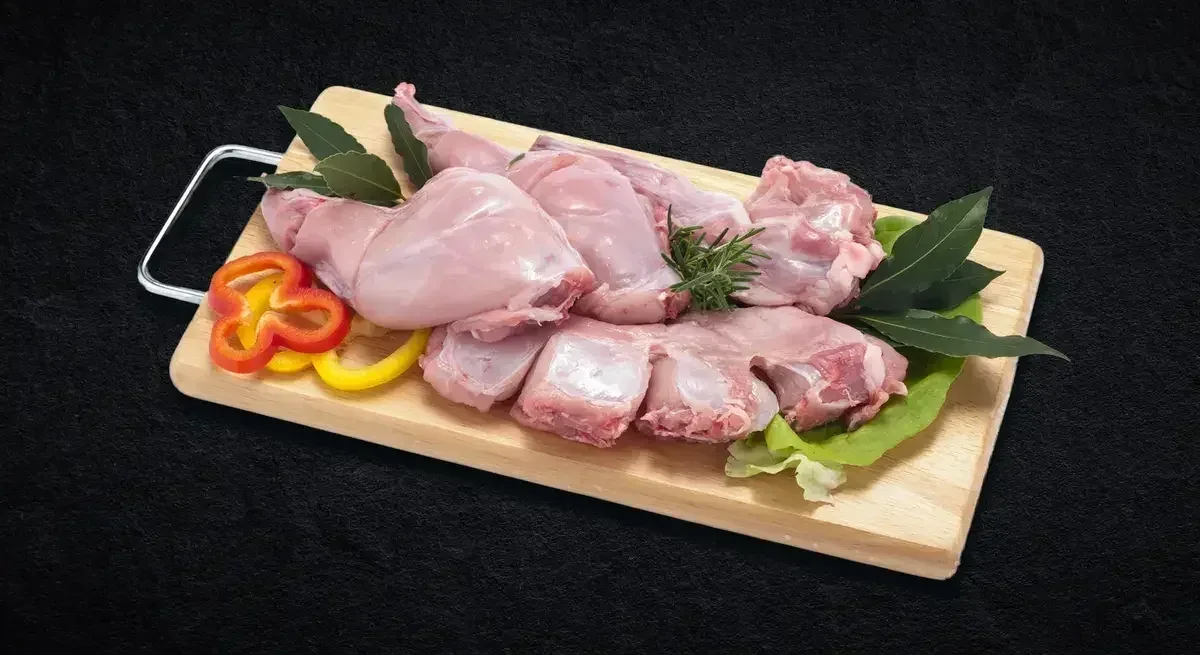
A dog with pancreatitis can eat a raw diet, provided the diet is low in fat. Raw or cooked is not the deciding factor; the fat load is. The clinical shorthand for “low fat” in dogs is roughly under 30 grams of fat per 1,000 kcal, and the honest problem is that most raw proteins owners reach for sit far above that. Pick the wrong ones and a bowl that looks lean can carry three times the fat of a therapeutic diet.
That 30-gram figure comes from veterinary nutrition literature, not from a raw-feeding forum, and it is measured against calories rather than the weight of the bowl. For context, NRC 2006's nutrient targets set an adult dog's fat recommended allowance at 13.8 g per 1,000 kcal — the floor a healthy dog needs. A low-fat pancreatitis plan lives in the band between that floor and the 30-gram ceiling, and the whole job is choosing ingredients that keep you there.
How low does the fat actually need to go?
For most dogs recovering between pancreatitis episodes, the working target is under 30 grams of fat per 1,000 kcal, with some specialists pushing tighter — published maxima for affected dogs cluster around 24 to 25 g per 1,000 kcal. The American College of Veterinary Nutrition frames it as a three-band scale: below 30 g per 1,000 kcal is low fat, 30 to 50 is moderate, and above 50 is high fat. Those bands are the reference I use for every number on this page.
The reason this trips people up is the unit. A raw label or a food blog will tell you a food is “8% fat” or “12% fat,” but a percentage by weight is close to meaningless for a wet food that is three-quarters water. A raw meal listed at 3% fat as-fed, at 78% moisture, is really about 14% fat once you take the water out. Counting fat per 1,000 kcal sidesteps the whole trap, because it measures fat against the energy the dog actually eats. It is the only basis that lets you compare a raw bowl, a kibble, and a therapeutic can on equal terms.
The fat in raw proteins, in the unit your vet uses
Here is the part almost no pancreatitis guide will give you: the common raw proteins, converted to grams of fat per 1,000 kcal using the same USDA-sourced figures that drive the Raw & Well calculator, and sorted against the low/moderate/high bands. The calculator computes energy the standard way — 4 kcal per gram of protein, 9 per gram of fat — so these are the numbers the app would show you for each ingredient on its own.
| Raw protein (muscle/organ, per 100 g) | Fat | Fat per 1,000 kcal | Band |
|---|---|---|---|
| White fish (boneless fillet) | 0.7 g | ~10 | Low |
| Rabbit | 2.3 g | ~22 | Low |
| Poultry gizzard | 2.1 g | ~23 | Low |
| Ostrich | 2.7 g | ~24 | Low |
| Venison | 2.7 g | ~24 | Low |
| Beef liver | 3.6 g | ~32 | Moderate |
| Beef heart | 3.9 g | ~37 | Moderate |
| Chicken (thigh & breast blend) | 4.8 g | ~37 | Moderate |
| Green tripe | 3.7 g | ~45 | Moderate |
| Turkey (thigh & breast blend) | 9.0 g | ~56 | High |
| Beef (ground, chunks) | 15.4 g | ~64 | High |
| Pork (shoulder, loin, ground) | 17.5 g | ~77 | High |
| Lamb (ground, chunks) | 18.6 g | ~78 | High |
| Chicken back / carcass | 28.7 g | ~91 | High |
| Duck | 39.3 g | ~98 | High |
Read the right-hand column and the whole feeding problem becomes visible at once. Duck and chicken backs — two things a raw feeder treats as ordinary bowl-fillers — carry nine to ten times the fat of white fish per calorie. Lamb and pork, the classic “rich” meats, sit near 78, more than double the low-fat ceiling before you have added anything else.
Which raw proteins are actually low-fat?
Only a short list of raw proteins clears the 30-gram bar on its own: white fish, rabbit, poultry gizzard, ostrich, venison, and lean game such as kangaroo. Everything else is a moderate or high starting point that you would have to blend down.
Two of those entries are worth pausing on, because reputation and math disagree. Turkey is spoken of everywhere as a lean pancreatitis protein, yet a mixed thigh-and-breast portion lands around 56 g per 1,000 kcal — firmly in the high band. Skinless turkey breast on its own is far leaner, but “turkey” as a whole-cut blend is not low fat. Green tripe is the other one: prized as a gentle digestive food, it still reads about 45 g per 1,000 kcal, because tripe is a fattier tissue than its mild reputation suggests. For a fat-sensitive dog, that matters more than the folklore around it, and it is the kind of gap the numbers close that a food list never will. If you feed green tripe for its other qualities, treat it as a moderate-fat ingredient and portion it accordingly.
What a low-fat bowl looks like next to a standard one
Single ingredients are only half the picture, because dogs eat mixed bowls and the fat averages out across everything in them. Take a 400 g day for a mid-sized dog and build it two ways — or calculate daily calories for your dog and see the fat comparison live.
A deliberately lean bowl — 200 g white fish, 150 g rabbit, 50 g beef liver — totals about 6.6 g of fat across roughly 360 kcal. That works out to ~18 g of fat per 1,000 kcal: comfortably low, and still above the 13.8-gram floor, so the dog is not starved of fat. Now build the same 400 g the way a lot of raw diets actually run — 300 g lamb, 100 g chicken back — and it carries about 85 g of fat across roughly 1,030 kcal, or ~82 g per 1,000 kcal. Same weight in the bowl, four and a half times the fat, and one of them sits where a pancreatitis dog should not be. This is why I ask owners to build the plan against calories from the start rather than reverse-engineer it later; if you want a hand converting portions to calories, the daily calorie math is the anchor everything else hangs off.
Fat is the lever — not whether the food is raw
The most common thing I hear is that raw is “too rich” for a pancreatic dog and should be dropped entirely. I read it the other way. Richness is just fat, and fat is a number you can steer; the raw-versus-cooked framing hides the variable that actually matters. Veterinary nutritionists are candid that the evidence base here is thin — there are no controlled trials defining a fat tolerance for dogs with pancreatitis, so the field works from clinical experience and a prudent ceiling rather than a proven line. What the evidence does point at is the trigger list, and it is mostly not about the base diet. In the largest risk-factor study, dietary indiscretion from the trash carried about a 13-fold higher pancreatitis risk, unusual food items four to six times, table scraps roughly doubled it, and obesity carried about 2.6 times the risk. A measured lean bowl is far down that list. The stolen block of cheese and the weekly roast trimmings are near the top.
One myth worth retiring while we are here: pancreatitis does not require protein restriction. The old advice to cap protein has no evidence behind it, and cutting protein to “rest” the pancreas can cost a recovering dog the muscle it needs. Keep protein at or above the normal requirement and spend your effort on the fat instead.
The fat floor: why "as little as possible" is also wrong
Chasing fat to zero is its own mistake. Fat carries the fat-soluble vitamins A, D, E, and K, and supplies the essential fatty acids a dog cannot make, so a fat-free diet is genuinely inappropriate even for a hyperlipidemic dog — the guidance is to hold fat near the recommended allowance of about 14 g per 1,000 kcal rather than below it. This is exactly why white fish, at roughly 10 g per 1,000 kcal, is not a complete answer by itself: fed alone it can undershoot the floor. The fix is not more fatty meat but a small, controlled fat source your veterinarian signs off on, which is also how omega-3s usually enter the plan. If fish oil is used for its anti-inflammatory effect, remember each capsule adds about a gram of fat, so it counts toward the day's total and is dosed, not poured. The target is a narrow band, not a race to the bottom.
When it's a flare, not a feeding question
None of this applies during an active episode. Vomiting, a hunched or painful belly, refusal to eat, or sudden lethargy are veterinary events, and diet math waits until the dog is stable. Short-term fasting has not been shown to worsen outcomes in dogs, and modern practice often reintroduces food earlier than the old “rest the gut for days” rule — but that call belongs to the clinician in front of the dog, not to a feeding plan. Once your dog is eating again and stable, reintroduce the low-fat diet slowly and change one thing at a time, so that if something does not sit well you can see what it was. Dogs that also carry another diagnosis need the plans reconciled rather than stacked: a dog managing kidney disease and its phosphorus limits or an older dog with several shifting tolerances is balancing more than one target, and that is a conversation for your vet with the numbers in front of you. If you are moving a sensitive dog onto fresh food for the first time, do it on the gentle timeline used for a dog whose gut is already under investigation, not the fast one.
Can a dog with pancreatitis eat a raw diet?
Yes, a stable dog between episodes can eat raw, as long as the bowl stays under roughly 30 g of fat per 1,000 kcal. Raw versus cooked is not the deciding variable — fat is. Lean proteins such as white fish, rabbit, and gizzard make it workable; duck, lamb, and pork do not. Your veterinarian sets the exact ceiling for your dog.
Sources & References
- National Research Council. (2006). Nutrient Requirements of Dogs and Cats. Washington, DC: The National Academies Press. Adult fat recommended allowance (13.8 g/1,000 kcal) and essential fatty acid requirement. View Publication →
- Shmalberg J. (2016). Controversies in the Nutritional Management of Pancreatitis. Today's Veterinary Practice (ACVN Nutrition Notes), Nov/Dec 2016. Low-fat definition (< 30 g/1,000 kcal), fat bands, published maxima, and risk factors. ACVN / TVP →
- Lem KY, Fosgate GT, Norby B, et al. (2008). Associations between dietary factors and pancreatitis in dogs. JAVMA, 233(9), 1425–1431. Dietary-indiscretion, table-scrap, and obesity risk figures. PubMed →
- USDA FoodData Central. Nutrient composition for the raw proteins used in the Raw & Well IngredientDatabase (fat and protein per 100 g). FoodData Central →
- WSAVA Global Nutrition Committee. Global nutrition guidelines and diet-assessment tools. WSAVA →