
Last Updated: March 29, 2026 – By Dr. Sarah Missaoui, DVM
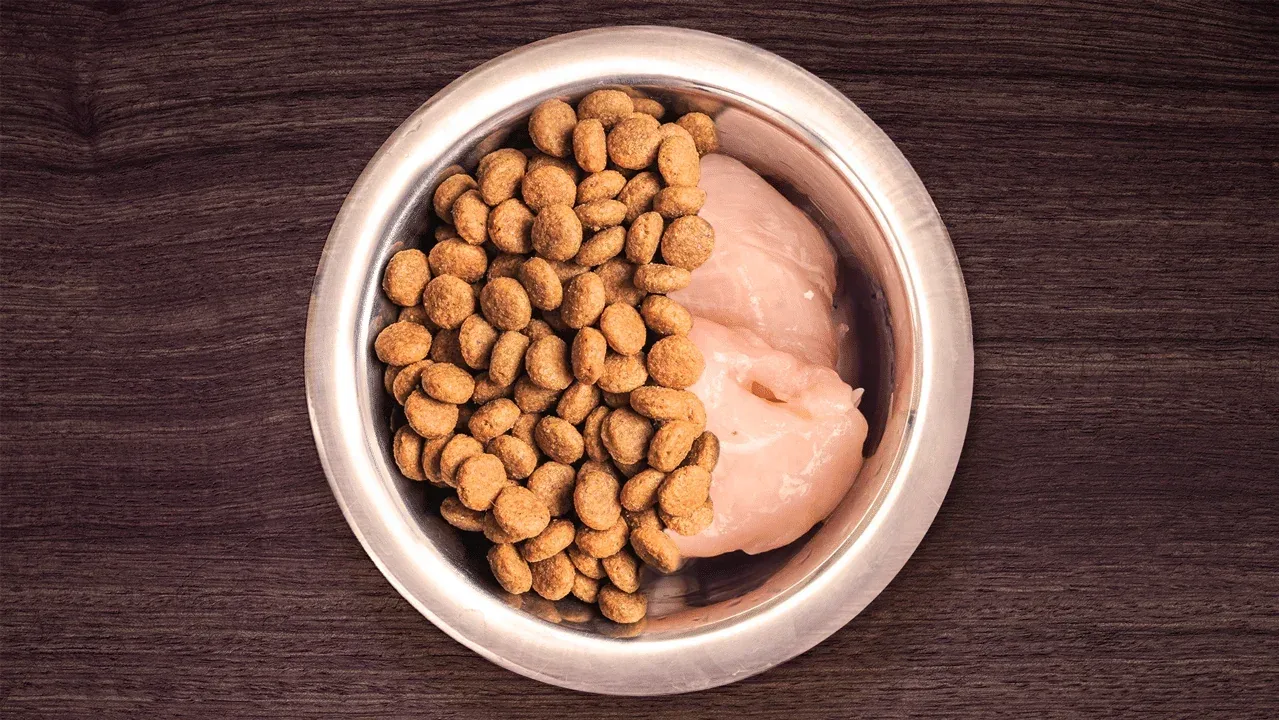
Most healthy dogs transition from kibble to raw in 7–14 days; dogs with pancreatitis history, IBD, or kidney disease need 4–8 weeks with veterinary oversight. Start with one protein, change one variable at a time, and use stool and appetite as feedback.
What Is a Raw Dog Food Transition and Why Does It Matter?
Many dogs do better when you transition gradually. The point is not to 'shock' the gut. The point is to learn what your dog tolerates while keeping the plan repeatable.
Use this as an example structure. If your dog has a history of GI disease, start more conservatively and work with your veterinarian.
Speed is less important than stability. The most reliable transitions keep protein consistent and only change one thing when stool changes.
Why transitions feel stressful
If you've been digging into raw feeding, you've probably already hit this pattern:
Transitions feel stressful because you can't see the 'inside.' Keep it simple: pick a starting plan, track what you changed, and slow down when stool quality drops.
You need a repeatable process. Some dogs transition quickly, others need more time. Use stool, appetite, and energy as feedback and slow down when needed.
NRC 2006 is a reference frame. During a transition, your first goal is tolerance and consistency. Once the dog is stable, you can evaluate the full recipe against reference targets.
A transition structure you can actually troubleshoot
Phase 1 (first few days): keep one lean protein and a small raw portion; if stool loosens, hold steady.
Phase 2 (middle): increase gradually only if stool and appetite stay stable; keep ingredients simple.
Phase 3 (later): add variety only after several stable days; introduce organs late and in small amounts.
If you need to pivot: simplify protein, slow the pace, and change one variable at a time.
Common questions (kept short)
Does a senior dog require a slower transition timeline than a younger adult dog?
Often, yes. Many seniors do better with a slower approach. If your dog has medical history or takes medications, transition with your veterinarian.
When is the safest time to introduce a second raw protein during the transition?
Wait until stool and appetite are stable for several days, then introduce variety gradually.
How long does it take a dog to adjust to a new diet?
It varies. Some dogs settle within days; others need a slower approach. Use stool quality, appetite, energy, and any vomiting/diarrhea as feedback. If symptoms persist or your dog is medically fragile, transition with your veterinarian.
Why is separate-meal timing crucial during a kibble-to-raw switch?
Some dogs tolerate mixed meals, others do better with separate meals during transition. Use stool and appetite as feedback and adjust slowly.
Can I rotate different proteins every day during the 10-day plan?
Usually not at first. Keeping the protein consistent makes troubleshooting easier. Add variety once things are stable.
What should I do if my dog refuses the raw meat texture?
Try smaller pieces, a gentle warm-up, or lightly searing the outside for aroma. Keep everything else stable so you can tell what worked.
A short checklist before you speed up
- No vomiting and no persistent diarrhea
- Stool is stable for a few days
- Appetite is normal and energy is steady
- If anything drifts, slow down and simplify instead of 'powering through'
Sources & References
- National Research Council. (2006). Nutrient Requirements of Dogs and Cats. Washington, DC: The National Academies Press. View Publication →
- Suchodolski, J.S. (2011). Intestinal microbiota of dogs and cats: a bigger world than we thought. Vet Clin North Am Small Anim Pract.
- Hand, M.S., Thatcher, C.D., Remillard, R.L., Roudebush, P., Novotny, B.J. (2010). Small Animal Clinical Nutrition.