
Last Updated: March 29, 2026 – Verified by Dr. Sarah Missaoui, DVM
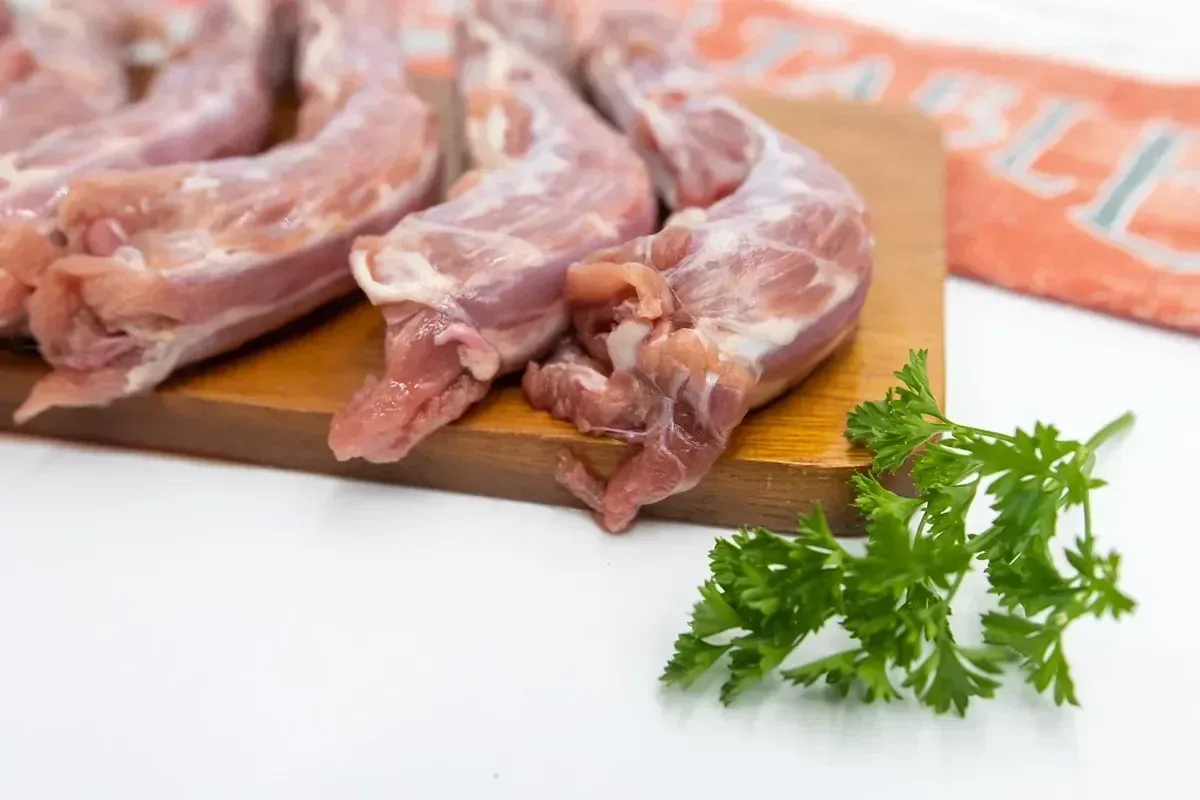
Edible raw bones – chicken necks, duck wings, lamb ribs – are safe for most dogs when correctly sized. Weight-bearing bones (femur, knuckle) risk dental fracture regardless of dog size. Treat the decision as both a safety question and a nutrition question: bone content contributes calcium and phosphorus that must balance against NRC 2006 targets in the full recipe.
Do not feed cooked bones. Cooking makes bones more brittle and can increase splinter risk.
Use stool as feedback: white/chalky can signal too much bone; loose stool can signal too little or a transition issue. Adjust in small steps.
Keep bone intake reviewable in the context of the full recipe, using NRC 2006 as a reference.
What are Raw Bones for Dogs and Why do They Matter?
In raw feeding, bones often provide calcium and phosphorus. Some dogs also use soft, edible bones as a chewing activity. Dental status and supervision matter more than ideology.
Safe (Edible) Bones:
- Chicken necks, backs, and wings.
- Turkey necks (for large dogs).
- Duck necks and wings.
- Lamb ribs.
Unsafe (Avoid):
- Cooked bones: These can become brittle and sharp.
- Weight-bearing marrow bones: These remain too hard for your dog's teeth.
- Small rib bones (pork): These present a severe choking risk.
Bone decisions work better when you separate two questions: 'Is this safe to chew?– and 'How does this change the mineral math of the full diet?'
Why bone advice gets noisy
If you've been digging into raw feeding, you've probably already hit this pattern:
- Vet visits that didn't solve the root problem - prescriptions masked your dog's symptoms without fixing their nutrition.
- Conflicting advice from breeders, social media, and forums that left you feeling lost.
- Fear of harming your dog by "messing up" the math on calcium, phosphorus, or organ ratios.
- Exhaustion from research - you've spent hours reading but still lack confidence.
Bone advice gets noisy because it mixes two topics. One is physical safety (teeth, choking). The other is recipe math (how much bone fits the whole diet).
Separate safety (teeth, choking) from recipe math (how much bone fits the full diet).
NRC 2006 is a reference frame. It does not 'approve' a recipe. Use it to check calcium and phosphorus in the context of the full diet.
Choose bones that encourage chewing rather than swallowing whole. If your dog gulps food, use ground bone or a calcium source you can measure safely.
Tooth safety is real. Very hard, weight-bearing bones are a common risk pattern for dental fractures; supervision and bone choice matter more than what the bone 'contains.'
Monitor Stool Quality
Your dog's stool serves as the ultimate indicator of their bone intake. Learn to identify the clinical "white chalk" marker:
- White/Crumbly Stool: This can indicate too much bone. Consider reducing the bone portion and reassessing.
- Straining to Poop: This likely signals constipation from bone excess.
- Firm, Dark Stool: This represents optimal bone balance for your dog.
How to choose bones without turning dinner into an ER visit
Size for chewing, not swallowing. Pieces should be too large to gulp and should slow the dog down.
Prefer softer, non-weight-bearing bones. Poultry necks/backs/wings are often more 'edible' than dense recreational bones.
Supervise the first exposures. If your dog tries to gulp, stop and switch to ground bone or a measured calcium plan.
Keep the recipe math in view. Bone changes stool quickly and can move calcium/phosphorus more than owners expect.
Common questions (kept short)
How often should raw bones be fed each week to a dog?
Some dogs do fine with a few bone-inclusive meals per week. Others do better with less, or with ground bone. Use stool, comfort chewing, and the full recipe output as feedback.
Are chicken bones clinically safer than beef or pork bones for dogs?
Often, yes. Softer non-weight-bearing poultry bones tend to be easier to chew than many weight-bearing bones. Dental health still matters.
Can puppies safely eat raw bones during skeletal development phases?
Puppies have growth-sensitive mineral needs. If you feed bones during growth, use a growth-appropriate plan and involve your veterinarian, especially for large-breed puppies.
What is a 'Slab Fracture' from bones?
A slab fracture is a dental injury to the carnassial tooth. It can happen when a dog bites down on very hard chews. Avoid very hard, weight-bearing bones if tooth safety is a concern.
Can I feed ground bones instead?
Ground bone can reduce mechanical risk for gulpers and dogs with dental disease. It still needs to fit the overall recipe and life stage.
How do I avoid 'bone-constipation'?
Use stool as feedback. If stool turns white/chalky or the dog strains, reduce bone content and reassess.
When to skip whole bones entirely
- Gulpers / fast eaters
- Dogs with cracked teeth, missing teeth, or painful chewing
- Dogs with recurring constipation
- Puppies (especially large/giant breeds) – higher-stakes mineral targets
Sources & References
- National Research Council. (2006). Nutrient Requirements of Dogs and Cats. Washington, DC: The National Academies Press. View Publication →
- U.S. Food and Drug Administration. Bones and other items can obstruct the digestive tract (consumer overview). FDA animal health literacy →
- WSAVA Global Nutrition Committee. Global nutrition guidelines (patient assessment and practical tools). WSAVA →
- Dillitzer N, Becker N, Kienzle E. (2011). Intake of minerals, trace elements and vitamins in bone and raw food rations in adult dogs. British Journal of Nutrition, 106(S1), S190–S192. DOI →
- USDA FoodData Central. SR Legacy and Foundation Foods nutrient composition database. FoodData Central →
- FEDIAF. (2024, updated 2025). Nutritional Guidelines for Complete and Complementary Pet Food for Cats and Dogs. Brussels, Belgium: European Pet Food Industry Federation. View Guidelines →