
Last Updated: March 29, 2026 – By Dr. Sarah Missaoui, DVM
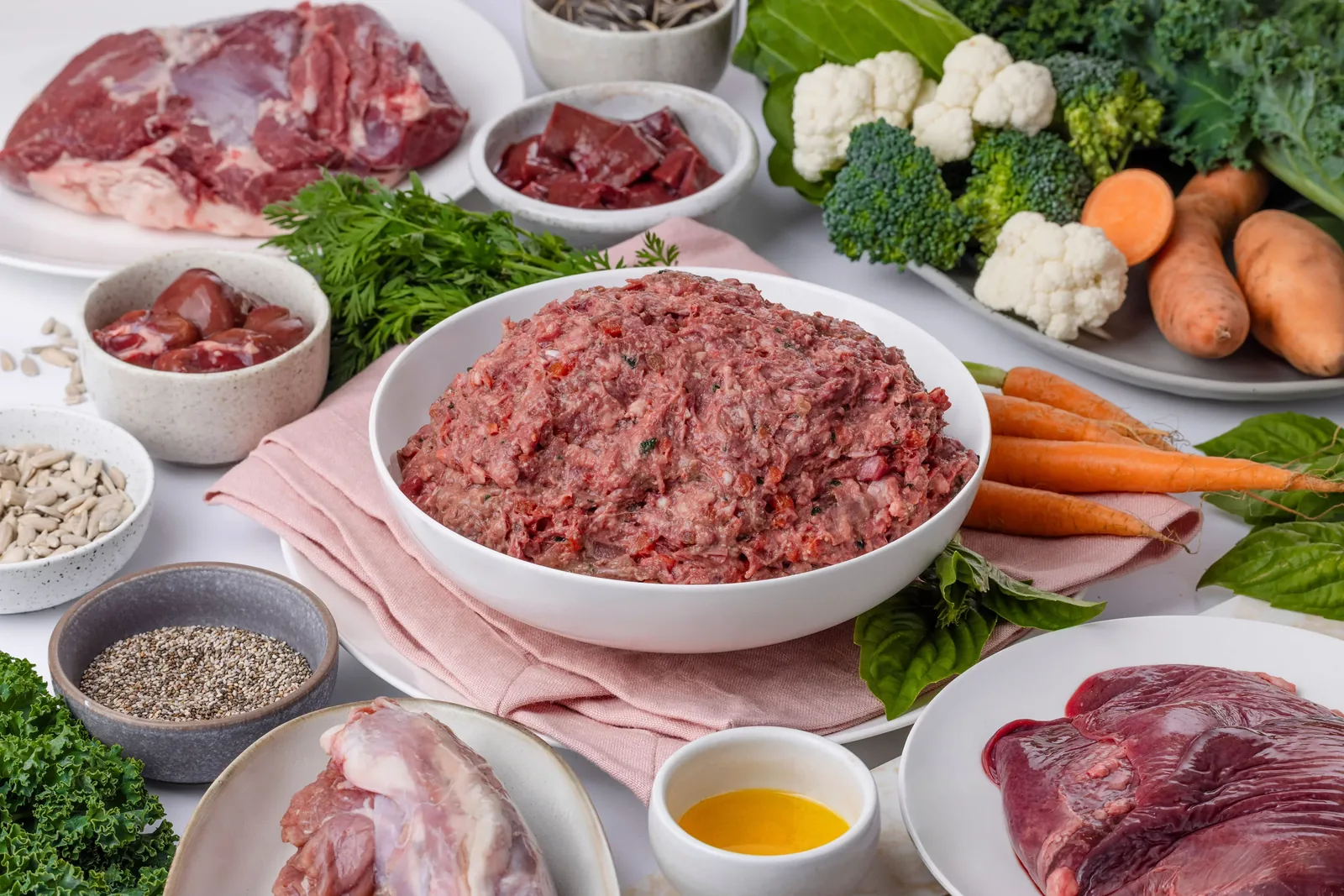
A compliant beginner recipe follows one scaffold: 70% muscle meat, 10% raw meaty bone, 10% liver, 10% secreting organ – one protein only for the first two stable weeks. Pick one lean protein, change one variable at a time, and use stool and appetite as feedback. Once your dog is stable, you can evaluate the full recipe against reference targets.
What are Raw Dog Food Recipes and Why do They Matter?
Your dog's digestive system can be sensitive to sudden change. For a beginner, your goal in the first phase is not 'variety', it is gut stability . Feeding one lean protein makes troubleshooting easier if stool changes.
Some dogs handle richer meats early; others don't. Start lean if your dog has a sensitive stomach, and adjust based on stool and appetite.
NRC 2006 is a reference frame. Use it once your dog is stable to sanity-check whether a recipe is missing key nutrients. Early on, prioritize tolerance and consistency.
Beginners often add organs too early or too fast. Introduce them slowly and treat stool quality as feedback.
Why starting feels hard
If you've been digging into raw feeding, you've probably already hit this pattern:
Starting a raw diet feels overwhelming because there are so many conflicting sources.
Starting feels hard because you can't see what's 'working' yet. Keep the plan simple, write down what changed, and slow down when stool changes.
You need a simple starting plan and a way to review the full recipe once your dog is stable.
A beginner phase you can interpret
Pick one lean protein. Keep it consistent at first. Add variety only after stool is stable.
Be conservative with bone and organs. If you use edible bone, match it to chewing style and size. Introduce organs slowly and treat stool as feedback.
Set a starting portion, then adjust. Use body condition, weight trend, appetite, and stool quality. If there are medical conditions, get veterinary guidance for the plan.
Common questions (kept short)
Can I batch-prep and freeze a full week of raw meals safely?
Often, yes. Batch-prepping and freezing daily portions can make the week easier and can reduce repeated handling. Keep food-safety practices tight (clean surfaces, cold chain, safe thawing), and avoid repeated thaw/refreeze cycles when you can.
Is chicken or turkey better for the first week?
Either can work. Many dogs do well with a lean cut at first. Use stool and appetite as feedback, and slow down if symptoms appear.
When should I introduce liver?
Introduce it slowly once stool is stable. Start small and treat stool quality as feedback. If your dog has GI disease, do this with your vet.
Why start with only one protein for a beginner recipe?
Baseline stability. If you mix multiple meats and stool changes, it's harder to identify what drove the change. Keeping one protein at first makes troubleshooting easier.
Do I need NRC supplements on Day 1?
Not always. Early on, tolerance and consistency matter. Once your dog is stable on the new pattern, review the full recipe against reference targets and adjust the long-term plan. If you're feeding a puppy, a dog with disease, or a high-demand athlete, get veterinary guidance early.
Can I feed commercial raw and homemade together?
Sometimes, as a practical bridge. You can use a commercial option during a transition if it helps you stay consistent. If you mix approaches, keep the plan stable long enough to interpret outcomes.
A checklist to keep beginners out of trouble
- Calcium and phosphorus: avoid guessing; don't 'freehand' bone.
- Liver/organ pacing: introduce slowly; rich additions are a common trigger for loose stool.
- Omega-3 and iodine: common long-term gaps if you never plan for them.
- Manganese: meat-heavy bowls often miss it unless you add a deliberate source.
- Energy: portion changes should be driven by body condition and weight trend, not just a fixed percent rule.
Sources & References
- National Research Council. (2006). Nutrient Requirements of Dogs and Cats. Washington, DC: The National Academies Press. View Publication →
- Dillitzer N, Becker N, Kienzle E. (2011). Intake of minerals, trace elements and vitamins in bone and raw food rations in adult dogs. British Journal of Nutrition, 106(S1), S190–S192. DOI →
- WSAVA Global Nutrition Committee. Global nutrition guidelines (patient assessment and practical tools). WSAVA →
- USDA FoodData Central. Food nutrient data (use when you need numeric ingredient estimates). FoodData Central →