
Last Updated: March 29, 2026 – By Dr. Sarah Missaoui, DVM
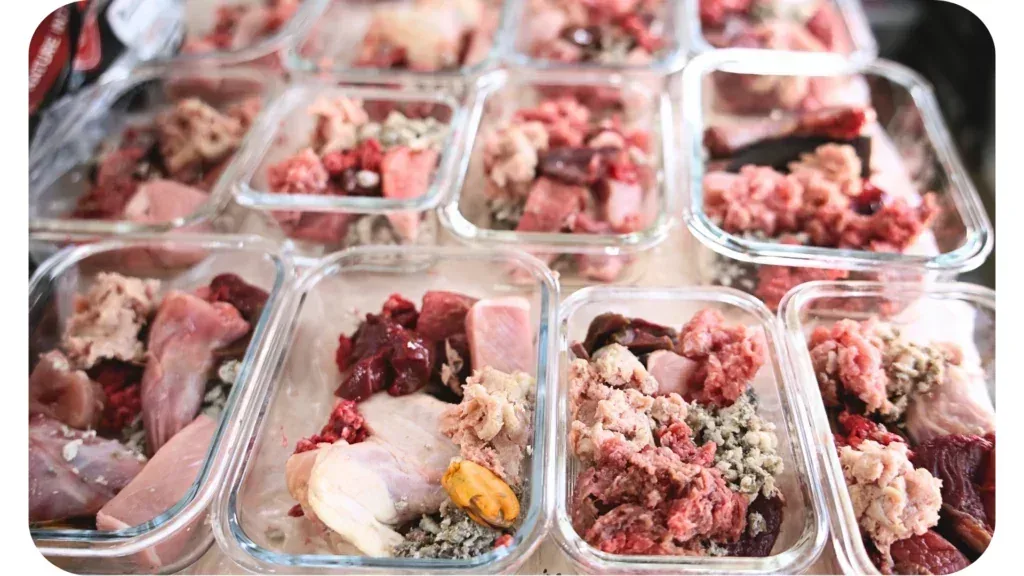
Raw meat is perishable. Use conservative storage windows, label your portions, and treat 'smell/slime' as a stop sign. When in doubt, discard it.
Ground meat usually spoils faster than whole cuts because it has more surface area.
Portioning is the simplest win: thaw what you'll use and keep the rest sealed and cold.
What Is Raw Dog Food Shelf Life and Why Does It Matter?
Fresh meat can carry bacteria. Storage is about safety first, then quality. Cold slows bacterial growth; time and oxygen still change texture and fat quality.
The practical goal is simple: thaw small portions, keep the fridge cold, and keep a clear 'prep date' system.
If you only adopt one habit, make it this: label the container with the prep date and use 'first in, first out' rotation. It reduces mistakes more than memorizing timelines.
A food-safety system you can actually follow
Food safety gets easier when you stop trying to remember timelines and instead follow a repeatable routine. The goal is to keep meat cold, keep it sealed, and keep handling predictable. The same cold-chain logic applies away from home: if you're packing raw food for travel or a long day out, move it frozen in an insulated cooler and don't let it sit out at a rest stop.
NRC 2006 is not a food-safety document. Use it as a nutrition reference; use USDA/FDA/CDC guidance for handling, thawing, and sanitation.
If you thaw in the refrigerator and the meat stays cold, refreezing can be possible. If it warmed during thawing or sat out, discard it.
Four habits that prevent most mistakes
- Portion before freezing. Small portions thaw faster and reduce repeat thaw cycles.
- Keep it sealed and cold. Store on a bottom shelf in a closed container to reduce drips and cross-contamination.
- Label with a prep date. Use FIFO rotation so you're not guessing.
- Reduce air exposure. Vacuum sealing helps; if you don't vacuum seal, press out air and rotate stock more often.
Source note: audits of home-prepared raw diets often find at least one shortfall when recipes aren't measured and reviewed, but that's a nutrition point, not a storage timeline. Dillitzer N, Becker N, Kienzle E. (2011) British Journal of Nutrition 106(S1), S190–S192. DOI
Common questions (kept short)
Does organ meat spoil faster than muscle meat in the refrigerator?
Often, yes. Many organs have high moisture and can turn faster than whole muscle cuts. Keep organs colder, portion smaller, and use them earlier in the rotation.
What is the safest method to thaw raw dog food from frozen?
Refrigerator thawing is the most conservative method. Avoid leaving meat out on the counter. If you use cold-water thawing, keep the food sealed and follow food-safety guidance.
Does vacuum sealing meaningfully extend the freezer life of raw food?
Vacuum sealing can reduce freezer burn and slow quality loss. Exact timelines vary by freezer temperature stability, packaging, and fat content. If you vacuum seal, you may be able to store longer with better quality.
What are the practical signs of spoilage?
Smell and texture are the most practical cues. Sour or off odors, stickiness, or slime are reasons to discard. When in doubt, throw it out.
Is freezer burn dangerous?
Freezer burn reflects dehydration and oxidation. It's not inherently toxic, but it can reduce palatability and quality. You can trim dry edges if the rest still looks and smells normal.
Can I refreeze meat after thawing?
Sometimes, if it stayed cold during thawing (for example, in the refrigerator). If it warmed during thawing or sat out, discard it.
Temperature and handling (quick rules)
- Thaw in the refrigerator. Avoid counter thawing.
- Keep raw sealed and contained. Bottom shelf, closed container, and clean surfaces.
- Don't leave food in the bowl. Discard leftovers and wash the bowl.
- Avoid repeat freeze'thaw cycles. Portion before freezing.
Primary handling references: CDC: Preventing Food Poisoning; FDA: safe handling of raw pet food.
Sources & References
- National Research Council. (2006). Nutrient Requirements of Dogs and Cats. Washington, DC: The National Academies Press. View Publication →
- FDA Center for Veterinary Medicine. (2023). Safe handling of raw pet food. FDA Safety Guide →
- CDC. (2025). Preventing Food Poisoning. CDC guide →
- Dillitzer et al., Br J Nutr 106(S1):S190–S192, 2011. Intake of minerals, trace elements and vitamins in bone and raw food rations in adult dogs. DOI →