
Last Updated: June 30, 2026 – By Dr. Sarah Missaoui, DVM
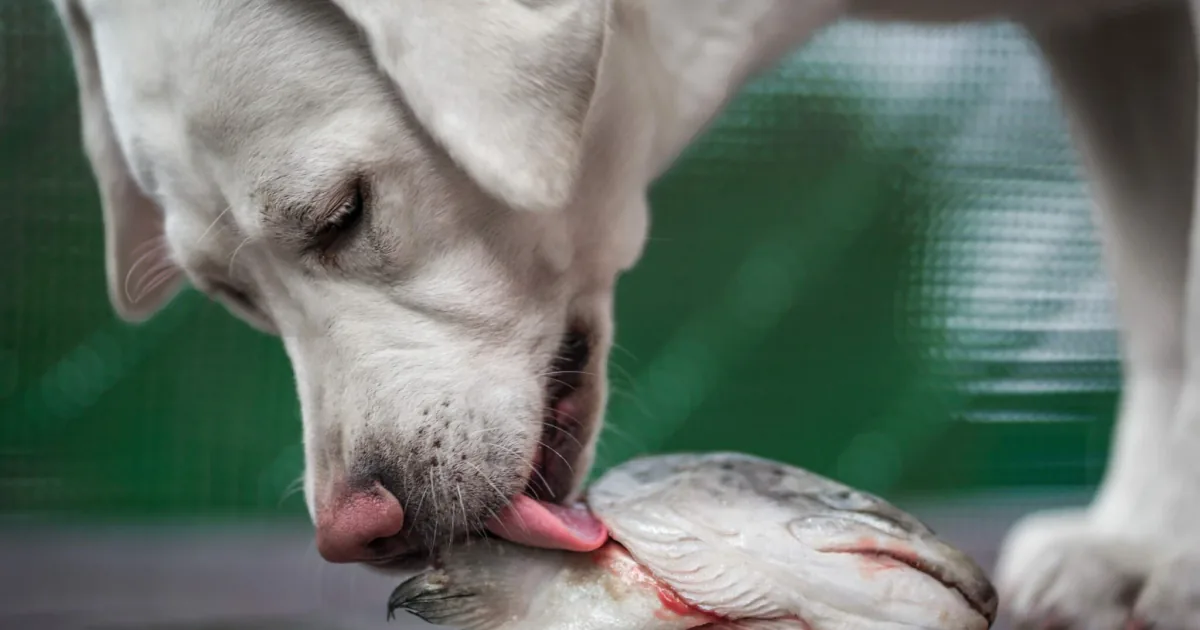
NRC 2006 sets crude protein at 25 grams per 1,000 kilocalories for adult dogs — a 30 kg Labrador eating 1,650 kcal per day needs just over 41 grams daily, easily cleared by most raw diets. Calcium is harder: the NRC recommended allowance is 0.75 g per 1,000 kcal, and beef-neck-heavy rotations can run a quarter below that for years without flagging on a body weight percentage check. Up to one in four Labradors carries a POMC gene variant that disrupts satiety signaling — meaning portion control is structural for many Labs, not behavioral. The NRC adult maintenance formula (130 kcal × BW0.75) produces lower calorie targets than the 2% rule for overweight dogs, which means most are eating more than the math supports.
NRC 2006 vs Body Weight Percentages: What the Lab Numbers Show
When feeding Labs we talk about what percentage of their body weight they need. Some sources say 2%, others 2.5%, some even say 3% for high energy dogs. Few sources mention how they calculate that or the differences among breeds. Many speak of percentages with unwarranted confidence while the overweight Lab in question continues to drool at the mention of dinner.
Labradors do not operate under the same dietary rules as other large breed dogs. Up to one quarter of Labradors have a variation in the POMC gene that impacts the signaling of hunger and satiety – this isn’t a habit you can train out. If your Lab is obsessive about food, the POMC gene variation might be at play; these dogs are typically heavier, more overweight, and more eager for food than Labs without this variation, because their hunger and fullness signaling systems don’t sync up effectively. That wide-eyed stare fifty seconds after eating could be the POMC system working overtime, having failed to recognize the food already consumed.
Many raw feed beginners will start with protein requirements. The 2006 NRC guidelines suggest crude protein at 25 grams per 1,000 kilocalories for adult dogs. That means for a 30 kg Labrador eating an average of 1,650 kcal per day, this is a total of just over 41 grams of protein per day, something achieved easily with beef, chicken and eggs in most raw diets. Calcium is not nearly as easy.
What the NRC Formula Produces for a 30 kg Labrador
| Feeding method | Basis | 30 kg Lab estimate | 40 kg Lab estimate | Tracks Ca:P? | Adjusts for metabolism? |
|---|---|---|---|---|---|
| 2% body weight | Scale weight | 600 g food / day | 800 g food / day | No | No |
| 2.5% body weight | Scale weight | 750 g food / day | 1,000 g food / day | No | No |
| NRC BW0.75 formula | Metabolic scaling | ~1,650 kcal / day | ~2,070 kcal / day | No | Yes |
| NRC + Ca tracking | Energy + minerals | 41 g protein, 1.24 g Ca / day | 52 g protein, 1.55 g Ca / day | Yes | Yes |
Reference values: National Research Council (2006), Nutrient Requirements of Dogs and Cats, Tables 15-4 (energy) and 15-5 (nutrient allowances). Values per adult maintenance. Calculate from your rotation’s actual ingredient weights, not category estimates.
Key Numbers: Labrador Raw Feeding vs NRC 2006
- Adult maintenance energy: 130 kcal × body weight0.75 (NRC 2006, Table 15-4)
- 30 kg Lab daily energy: ~1,650 kcal ME; 40 kg Lab: ~2,070 kcal ME
- Crude protein RA (adult): 25 g per 1,000 kcal ME — NRC 2006, Table 15-5
- Calcium RA (adult): 0.75 g per 1,000 kcal ME — NRC 2006, Table 15-5
- POMC gene variant: affects ~1 in 4 Labradors; disrupts satiety signaling (Raffan et al. 2016)
- Portion drift risk: 20% increase observed over 8 months without deliberate owner increase
How Do You Calculate Raw Food for a Labrador Using NRC Targets?
Calculate your Labrador’s daily energy need using 130 kcal multiplied by body weight raised to the power of 0.75. For a 30 kg Lab that produces approximately 1,650 kcal per day. Divide by 1,000 and multiply by NRC targets to get daily nutrient minimums: roughly 41 grams of crude protein and 1.24 grams of calcium. Use a daily calorie calculator to verify your Lab’s target before adjusting portions.
The percentage rule is a starting point, not a calculation. What follows is how to move past it:
- Calculate daily energy using 130 kcal × BW0.75. For overweight Labs, use the dog’s target healthy body weight rather than current scale weight — the formula already accounts for the non-linear relationship between mass and metabolic rate, so feeding to current weight in an obese dog overshoots the target. A 40 kg Lab with an ideal weight of 32 kg should be fed against 32 kg, not 40.
- Track calcium per 1,000 kcal, not per day. Set the daily portion, then calculate calcium per 1,000 kcal from your actual ingredient weights and compare to the NRC recommended allowance of 0.75 g. Beef-neck-heavy rotations routinely come in at 0.50–0.60 g. The calcium-to-phosphorus ratio matters too: phosphorus should not consistently outrun calcium in a breed with documented joint risks.
- Schedule oily fish as a protein source, not a topper. Sardines, mackerel or herring need to appear in the weekly rotation with enough frequency to shift the running EPA and DHA average. Two to three appearances per week at 100–150 g each is a workable starting point for a 30 kg Lab. Treating oily fish as occasional leaves omega-3 status well below what joint-predisposed breeds need from food alone.
What Three Years at 0.55 Grams Reveals About Percentage Feeding
Last spring I worked with a six-year-old neutered male Labrador, 38 kilograms and a three-year veteran of raw feeding. He received chicken thigh, turkey necks, ground beef and raw beef necks twice a week and no kibble. The owner had been weighing portions but wasn’t tracking anything but body weight percentages, yet was worried about his joints. My calculations showed him receiving around 0.55 grams of calcium per 1,000 kcal — about a quarter below the NRC 2006 guideline of 0.75 g per 1,000 kcal. While not catastrophic in isolation, after three years this creates a significant calcium deficit.
Why the Calcium Gap Compounds in a Joint-Prone Breed
Beef necks, high in phosphorus but without corresponding calcium content, were the culprit. While the owner had been meticulous with percentages of body weight added to the bowl each morning, no one showed her the mineral ratios in that bowl and their long-term impact. Especially in a breed at higher risk of joint issues like hip and elbow dysplasia, getting minerals balanced early on is crucial — you cannot simply add supplements later to rectify what the base diet missed for three years.
Looking through forums discussing feeding Labradors you’ll notice discussion on glucosamine, chondroitin, green-lipped mussel and turmeric, particularly for joint issues. I understand; these are easy add-ons to the food that appear to address the concern. However, these discussions usually miss the critical question: Was the dog’s diet balanced from the start, particularly calcium and phosphorus? You can’t throw supplements at an imbalanced diet and achieve the same results as a correctly formulated foundation. Whether your Lab follows a BARF or PMR framework, the mineral targets don’t change.
Similarly, many diets targeting joint support and lacking sufficient EPA and DHA don’t account for the breed predisposition for joint issues. The main sources of protein, such as chicken and beef, often lead to deficiencies in essential omega-3s without rotating in oily fish such as sardines, mackerel or herring — not just as a treat, but a weekly meal. For a full picture of how raw feeding ratios affect this, the raw food calculator guide covers how to balance a rotation across protein types.
Portion Drift and the Percentage Rule
The Labrador’s love for food can also lead to an unseen increase in portion sizes known as portion drift. What starts as a portion perfectly calibrated based on body weight morphs over time when a dog asks for more and you acquiesce with an extra scoop here and there over the next few months. Without noticing, a portion that started in January can grow to 20% larger by September, often before you notice a change in your dog’s physique in photographs side-by-side.
Calculating a Labrador’s maintenance calories based on body weight according to NRC’s adult maintenance equation can change things quite a bit for an overweight dog. The equation is: 130 kcal × body weight0.75. If this formula is applied, a 40 kg Lab doesn’t require proportionately more food than a 30 kg dog — in fact, due to metabolism scaling sub-linearly with size, most overweight Labs eating what a typical body weight percentage suggests are significantly overeating when comparing to calculated needs. The percentage rule simply uses the scale weight without accounting for this underlying biological principle.
It remains an open question whether minor mineral imbalances during a dog’s youth in breeds susceptible to hip and elbow issues make any tangible difference later in life.
NRC 2006 Reference — Labrador Nutrition Targets at a Glance
- Adult maintenance formula: 130 kcal × BW0.75 — NRC 2006, Table 15-4
- Crude protein RA: 25 g per 1,000 kcal ME — NRC 2006, Table 15-5
- Calcium RA: 0.75 g per 1,000 kcal ME — NRC 2006, Table 15-5
- Phosphorus RA: 0.75 g per 1,000 kcal ME — NRC 2006, Table 15-5
- POMC gene variant prevalence: ~1 in 4 Labradors; disrupts satiety signaling (Raffan et al. 2016)
- Observed beef-neck Ca shortfall: 0.50–0.60 g per 1,000 kcal in phosphorus-heavy rotations vs NRC target of 0.75 g
Sources: National Research Council (2006), Nutrient Requirements of Dogs and Cats, Tables 15-4 and 15-5. Raffan E et al. (2016), Cell Metabolism 23(5):893–900. DOI →
People Also Ask About Raw Feeding Labradors
How much raw food should I feed my Labrador?
Use the NRC adult maintenance formula: 130 kcal multiplied by your Lab’s body weight raised to the power of 0.75. A 30 kg Labrador needs approximately 1,650 kcal per day; a 40 kg Lab approximately 2,070 kcal. Body weight percentages (2–2.5%) are a rough starting point but do not account for metabolic scaling, meaning overweight Labs are typically overfed when percentages are used against current scale weight.
Is raw feeding good for Labradors with joint problems?
Raw feeding can support joint health in Labradors when the mineral foundation is correct from the start. The NRC 2006 calcium recommended allowance is 0.75 g per 1,000 kcal ME — a target many Lab rotations miss when beef necks dominate the bone source. Regular oily fish for EPA and DHA, and a correct calcium-to-phosphorus ratio, are more meaningful long-term than joint supplements layered on top of a mineral imbalance.
What raw foods are best for a Labrador Retriever?
A rotation covering multiple protein sources (chicken, beef, turkey), a genuine organ portion for fat-soluble vitamins (liver, not heart), appropriate bone for calcium, and oily fish two to three times per week for EPA and DHA covers the main NRC 2006 targets. The percentage of the bowl matters less than what each ingredient contributes per 1,000 kcal. Labs specifically benefit from consistent bone sourcing that maintains a calcium-to-phosphorus ratio within the NRC framework.
Can raw feeding cause weight gain in Labradors?
Yes, through portion drift — a gradual, unintentional increase in daily amount driven by the breed’s food-seeking behaviour. Labradors with the POMC gene variant (roughly one in four) will signal hunger regardless of what went in. Portions should be set against the NRC energy formula and checked against body condition score on a monthly basis, not adjusted in response to the dog’s requests.
Frequently Asked Questions
Why do beef-neck rotations create calcium shortfalls in Labradors?
Beef necks are high in phosphorus relative to their calcium contribution. When they form the primary bone source in a rotation, phosphorus climbs while calcium intake stays low — often sitting around 0.50 to 0.60 grams per 1,000 kcal against the NRC 2006 recommended allowance of 0.75 grams. The gap is not visible on a body weight percentage check, which measures only total food volume. Tracking calcium and phosphorus per 1,000 kcal against the NRC target is the only way to catch it before years have passed.
How does the POMC gene variant affect portion planning for raw-fed Labs?
The POMC gene variant, found in roughly one in four Labradors, disrupts the hormonal signal that tells a dog it has eaten enough. Dogs with this variant typically carry more weight and show stronger food-seeking behaviour than Lab littermates without it. For portion planning, this means the dog’s appetite signals cannot be used as feedback. Portions must be set against the NRC adult maintenance formula (130 kcal × BW0.75) and checked against body condition score, not hunger cues. Use the daily calorie calculator to establish the correct target first.
How often should a raw-fed Labrador eat oily fish?
Oily fish such as sardines, mackerel or herring should appear in the rotation as a scheduled protein source — two to three times per week at 100–150 g per meal — not as an occasional topper. For a breed at higher risk of joint issues, EPA and DHA status depends on the fish appearing with enough frequency to shift the running weekly average. A single weekly serving moves the dial; twice weekly is more reliable. The exact amount depends on total rotation kcal and what other fat sources are present in the bowl.
Sources & References
- National Research Council. (2006). Nutrient Requirements of Dogs and Cats. Washington, DC: The National Academies Press. View Publication →
- National Research Council. (2006). Nutrient Requirements of Dogs and Cats, Chapter 15 — Table 15-4 (adult maintenance energy: 130 kcal × BW0.75) and Table 15-5 (crude protein RA 25 g, calcium RA 0.75 g, phosphorus RA 0.75 g per 1,000 kcal ME). The National Academies Press.
- Raffan E, Dennis RJ, O’Donovan CJ, et al. (2016). A Deletion in the Canine POMC Gene Is Associated with Weight and Appetite in Obesity-Prone Labrador Retriever Dogs. Cell Metabolism, 23(5), 893–900. DOI →
- Dillitzer N, Becker N, Kienzle E. (2011). Intake of minerals, trace elements and vitamins in bone and raw food rations in adult dogs. British Journal of Nutrition, 106(S1), S190–S192. DOI →