
Last Updated: May 16, 2026 • By Dr. Sarah Missaoui, DVM
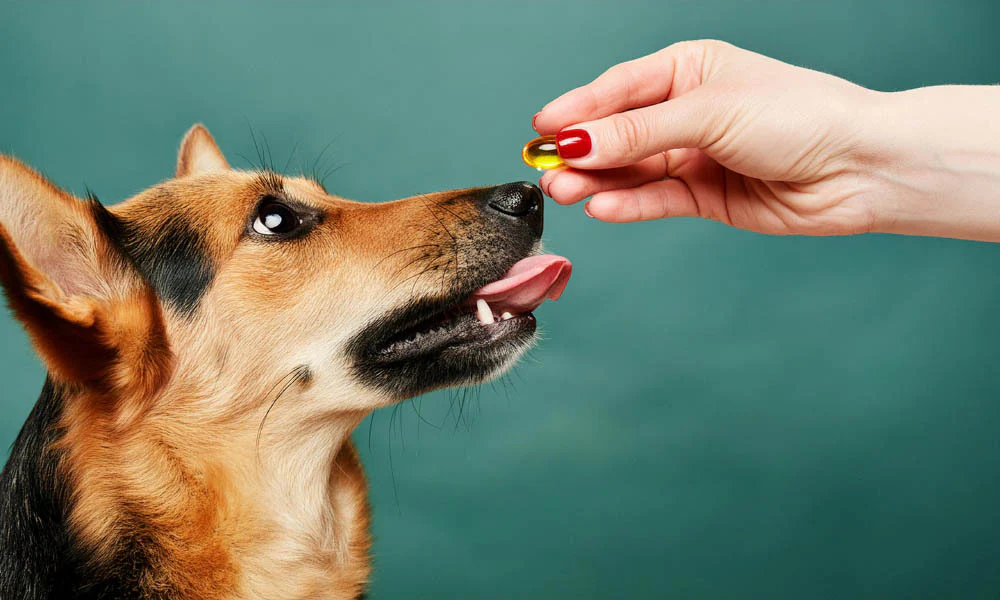
This guide is keyed to the supplement recommendations produced by the Raw & Well Nutrient Analyzer™. Every recommendation below is capped to NRC 2006 safe upper limits and adjusted for your dog's weight and life stage — start with the daily calorie needs baseline. The Raw & Well Nutrient Analyzer™ does not suggest a supplement unless a whole-food alternative has been ruled impractical first. Below you will find what to buy, how to match the dose from your Raw & Well Nutrient Analyzer™ report, and what forms to avoid.
How to Read Your Raw & Well Nutrient Analyzer™ Supplement Line
Every supplement recommendation follows the same format in your report:
SUPPLEMENT: Use [product name] (X mg/mcg/IU daily for Y days, total: Z mg/mcg/IU).The daily dose is what your dog needs per day - already capped to the NRC safe upper limit. The total is the cumulative amount over the analysis period. The days match your analysis period (typically 7 days).
If the daily dose is very small (0.1 g of kelp, 2 mcg of vitamin D), you can dose every 2-3 days instead of daily, using the total to calculate your portion. Precision matters most for selenium, vitamin D, copper, and iodine. Before supplementing, know what your food already delivers — our raw feeding ingredients guide breaks down what each ingredient category actually contributes per 1,000 kcal.
Zinc Picolinate
When the Raw & Well Nutrient Analyzer™ recommends it: Zinc is frequently deficient in poultry-heavy or organ-light recipes. If whole-food correction (oysters) requires more zinc than a practical daily portion can deliver, the Raw & Well Nutrient Analyzer™ switches to supplementation.
What to buy: Zinc picolinate. This form has better intestinal absorption than zinc oxide or zinc sulfate. Avoid zinc oxide - it is poorly absorbed and can accumulate.
How to match the dose: Most zinc picolinate supplements come in 15 mg or 25 mg capsules. Choose the capsule size closest to your recommended dose. Open the capsule and portion the powder if you need a fraction. Do not crush tablets meant to be swallowed whole.
Safety note: Zinc absorption competes with copper. The Raw & Well Nutrient Analyzer™ shows your zinc-to-copper ratio for reference and checks zinc and copper each against its own target; NRC 2006 publishes no harmful ratio for dogs. Do not exceed the recommended dose and do not stack multiple zinc sources.
Magnesium Glycinate
When the Raw & Well Nutrient Analyzer™ recommends it: Magnesium deficiency is uncommon but can occur in high-phosphorus, low-organ recipes. The Raw & Well Nutrient Analyzer™ flags it and recommends glycinate - the most bioavailable form with the fewest digestive side effects.
What to buy: Magnesium glycinate (or magnesium bisglycinate). Avoid magnesium oxide - it is poorly absorbed and acts mostly as a stool softener.
How to match the dose: Most capsules are 100-200 mg. Divide the capsule size by your daily dose to find your portion. If the dose exceeds a practical portion, the report tells you to split it across meals.
Manganese Chelate
When the Raw & Well Nutrient Analyzer™ recommends it: Manganese is low in most muscle-meat-based recipes because it is concentrated in bone and organ. The Raw & Well Nutrient Analyzer™ switches to supplementation when whole-food correction (green tripe, blue mussels) exceeds a practical daily amount.
What to buy: Manganese chelate (manganese bisglycinate or amino acid chelate). Avoid manganese sulfate - an inorganic salt with lower absorption.
How to match the dose: The dose is typically 1-5 mg daily. Most human supplements come in 5-10 mg tablets. A pill cutter or milligram scale helps with accurate portioning at these low doses.
Copper Chelate
When the Raw & Well Nutrient Analyzer™ recommends it: Copper is one of the most common gaps in raw diets, especially when liver is limited. If whole-food correction (beef liver) exceeds practical limits, the Raw & Well Nutrient Analyzer™ recommends copper chelate instead.
What to buy: Copper chelate (copper bisglycinate). Avoid copper sulfate - poorly absorbed and can cause gastrointestinal upset at supplementation levels.
Safety note - critical: Bedlington Terriers, Dalmatians, and Labrador Retrievers carry genetic risk for copper-associated hepatopathy. The Raw & Well Nutrient Analyzer™ applies a breed-specific cap (5 mg/kg DM) for these breeds. Copper supplementation for these breeds is a veterinary decision, not a diet decision.
Heme Iron
When the Raw & Well Nutrient Analyzer™ recommends it: Iron deficiency in raw diets is uncommon because red meat is abundant, but it can occur in poultry-heavy, low-organ recipes. The recommended form is heme iron - the same form found in meat - which avoids the gastrointestinal side effects of non-heme supplements.
What to buy: Heme iron polypeptide or heme iron concentrate. Avoid ferrous sulfate - poorly tolerated, can cause constipation and vomiting.
How to match the dose: Heme iron supplements typically provide 10-20 mg per capsule. The Raw & Well Nutrient Analyzer™ caps the supplement dose at the NRC safe upper limit.
Vitamin E Oil
When the Raw & Well Nutrient Analyzer™ recommends it: Raw diets high in polyunsaturated fats (fish, poultry fat) increase vitamin E requirements. Whole-food correction (wheat germ oil, almonds) is rarely practical at the required dose.
What to buy: Natural mixed tocopherols (d-alpha-tocopherol with other tocopherols). Avoid dl-alpha-tocopherol - synthetic and less bioavailable. Liquid oils are easier to portion than capsules at small doses.
How to match the dose: Use a graduated dropper. Vitamin E is fat-soluble - give it with a meal that contains fat. The Raw & Well Nutrient Analyzer™ caps vitamin E at the NRC safe upper limit (250 mg/1000 kcal for adults).
B-Complex
When the Raw & Well Nutrient Analyzer™ recommends it: When multiple B-vitamin gaps appear together (thiamin, riboflavin, niacin, B6, B12, folate, pantothenic acid), a B-complex is more practical and cost-effective than individual supplements.
What to buy: A canine-specific B-complex or a human B-complex without xylitol. Avoid megadose formulas - a typical human B-complex contains 10-100 times the canine requirement per tablet.
How to match the dose: This is the most common dosing question. For a 20 kg dog, the daily thiamin requirement is ~0.6 mg. A human B-complex tablet containing 50 mg per vitamin means you need roughly 1/80th of a tablet. Crush the tablet, divide the powder by weight using a milligram scale, and store the remainder. Liquid B-complex drops allow more accurate micro-dosing.
Kelp Powder (Iodine)
When the Raw & Well Nutrient Analyzer™ recommends it: Iodine is consistently low in raw diets that do not include seaweed or fish. Kelp is the most practical whole-food source - the Raw & Well Nutrient Analyzer™ recommends it by default and only switches to synthetic supplementation if kelp is impractical.
What to buy: Lab-tested kelp powder with a guaranteed iodine content on the label. Iodine content varies 10x by batch (200-2000 mcg/g). Look for batch-specific iodine assay results.
How to match the dose: The Raw & Well Nutrient Analyzer™ shows the dose in grams of kelp (not mcg of iodine) to account for batch variability. A typical dose is 0.1-0.5 g daily. Use a milligram scale - visual estimation at these amounts is unreliable.
Safety note: The Raw & Well Nutrient Analyzer™ flags iodine intake above 1,400 mcg/1,000 kcal ME. NRC 2006 publishes no safe upper limit for iodine in dogs; 1,400 mcg/1,000 kcal ME is the intake at which Castillo et al. (2001a), cited by NRC 2006, reported depressed thyroid function in puppies. Do not add additional iodine sources (sea vegetables, seafood, iodized salt) without reassessing total intake. If your dog has a history of thyroid disease, discuss kelp supplementation with your veterinarian first. For a deeper breakdown of where over-supplementation typically starts — and which nutrients accumulate dose on dose — see Am I Over-Supplementing My Dog?.
Selenium Drops
When the Raw & Well Nutrient Analyzer™ recommends it: Selenium is rarely deficient in raw diets that include organ meat (kidney), but the Raw & Well Nutrient Analyzer™ flags a gap when those sources are absent or rotated out.
What to buy: Selenium drops or selenium yeast. Avoid sodium selenite - less bioavailable than selenium yeast. Liquid drops are preferred for micro-dosing at the mcg level.
How to match the dose: The Raw & Well Nutrient Analyzer™ shows the daily dose in mcg. Liquid selenium typically provides 25-50 mcg per drop. Follow the product's mcg-per-drop specification.
Safety note - critical: Selenium has the narrowest safety margin of any trace mineral. The gap between adequate and toxic is small. Never exceed the recommended dose and do not stack selenium from multiple sources (Brazil nuts + supplement + organ meat).
Vitamin D Drops
When the Raw & Well Nutrient Analyzer™ recommends it: Raw diets low in fish, egg yolk, or liver can be deficient. Whole-food correction is typically impractical because the foods dense enough in vitamin D would need to be fed in unrealistic quantities.
What to buy: Vitamin D3 drops (cholecalciferol). Avoid D2 (ergocalciferol) - less bioavailable for dogs. Choose a product that specifies mcg per drop, not just IU.
How to match the dose: 1 mcg = 40 IU. Most drops provide 100-400 IU per drop. For a 20 kg dog, the typical requirement is ~2 mcg (80 IU) per day. Use the product's smallest measurable increment and dose every 2-3 days if daily dosing is impractical.
Safety note - critical: Vitamin D is the most dangerous supplement to overdose. NRC safe upper limit is 20 mcg/1000 kcal for most dogs and 15 mcg/1000 kcal for large breeds (>31.75 kg). The Raw & Well Nutrient Analyzer™ applies both caps. Vitamin D toxicity causes hypercalcemia and accumulates slowly - it is not immediately reversible.
Omega-3 Oil / Fish Oil
When the Raw & Well Nutrient Analyzer™ recommends it: Most raw diets are omega-3 deficient unless fatty fish is a regular component. Whole mackerel or sardines are the first recommendation; fish oil is the backup when whole fish is impractical.
What to buy: Wild-caught fish oil (salmon, sardine, anchovy, menhaden) with EPA+DHA content listed per ml. Avoid farmed fish oils and blended "omega-3" oils that may contain mostly ALA (which dogs convert poorly).
How to match the dose: The Raw & Well Nutrient Analyzer™ shows the daily dose in grams of total omega-3 or EPA+DHA. Convert to ml using the product's label. For example, if the label says 500 mg EPA+DHA per ml and the Raw & Well Nutrient Analyzer™ recommends 1.5 g/day, you need 3 ml. Give with a meal containing fat to aid absorption.
Safety note: Fish oil is a natural blood thinner - stop 7-10 days before surgery. Vitamin E requirements increase with higher PUFA intake; the Raw & Well Nutrient Analyzer™ accounts for this. Oxidation causes rancidity - buy in small quantities, refrigerate, and discard if the oil smells strongly of fish.
Eggshell Powder / Bone Meal (Calcium)
When the Raw & Well Nutrient Analyzer™ recommends it: Calcium is the mineral most commonly deficient in raw diets without sufficient edible bone. The Raw & Well Nutrient Analyzer™ flags it as a priority because Ca:P ratio is the most critical clinical metric. Eggshell powder is the preferred source; bone meal is listed as an alternative.
What to buy: Finely ground, food-grade eggshell powder. Do not use bone meal labelled for garden or agricultural use - it may contain heavy metals.
How to match the dose: One level teaspoon of eggshell powder weighs approximately 5 g. A milligram scale is recommended. The Raw & Well Nutrient Analyzer™ applies no absorption coefficient: NRC 2006 calcium allowances already allow for absorption, so the dose shown is what your dog needs to consume.
Safety note: Excessive calcium during growth (especially large-breed puppies) can cause permanent orthopedic damage. The Raw & Well Nutrient Analyzer™ flags Ca:P danger specifically for puppies and adjusts accordingly. Never supplement calcium independently of the ratio analysis.
What the Raw & Well Nutrient Analyzer™ Never Recommends
These are popular in raw feeding communities but are never recommended by the engine:
- Multivitamin powders - blanket coverage cannot match your dog's specific gaps
- Probiotic powders with added minerals - the mineral content is usually unlabelled
- Raw goat milk as a mineral source - amounts per serving are negligible
- Collagen or gelatine powders - incomplete proteins, do not contribute meaningfully to amino acid targets
- "Complete" raw diet balancers - necessarily over-supply some nutrients and under-supply others
When to Talk to Your Veterinarian
The Raw & Well Nutrient Analyzer™ is a nutritional screening tool, not a medical device. These situations warrant veterinary input before using the supplement recommendations:
- Your dog has a diagnosed medical condition (kidney disease, liver disease, pancreatitis, thyroid disease)
- Your dog is from a breed with copper accumulation risk (Bedlington Terrier, Dalmatian, Labrador Retriever)
- Your dog is pregnant, lactating, or under 6 months of age
- Your dog is taking medications that affect mineral metabolism
- Bloodwork has shown abnormal calcium, phosphorus, or liver enzyme levels
- The Raw & Well Nutrient Analyzer™ recommended dose exceeds the NRC safe upper limit - the report warns you explicitly when this happens
Quick Reference: Supplement Forms
| Supplement | Recommended form | Avoid |
|---|---|---|
| Zinc | Zinc picolinate | Zinc oxide |
| Magnesium | Magnesium glycinate | Magnesium oxide |
| Manganese | Manganese chelate | Manganese sulfate |
| Copper | Copper chelate | Copper sulfate |
| Iron | Heme iron | Ferrous sulfate |
| Vitamin E | Natural mixed tocopherols | dl-alpha-tocopherol |
| Vitamin D | D3 (cholecalciferol) | D2 (ergocalciferol) |
| Selenium | Selenium yeast or drops | Sodium selenite |
| Omega-3 | Wild fish oil (EPA+DHA labelled) | Blended "omega-3" oils |
| Calcium | Eggshell powder | Garden-grade bone meal |
Frequently Asked Questions
Should I supplement before knowing my dog's specific gaps?
No. Supplementing without identifying gaps risks oversupply of minerals with narrow safety margins - selenium, vitamin D, and copper in particular. Run a recipe analysis first, then supplement only what the analysis flags.
Can I use human supplements for my dog?
Some human supplements work at fractional doses - zinc picolinate, magnesium glycinate, vitamin D3 drops, and natural vitamin E are all usable. Avoid anything containing xylitol, artificial sweeteners, or added herbs. Always check the label for inactive ingredients before use.
How often should I reassess my dog's supplement needs?
Any time you change the recipe meaningfully - new protein, different bone source, adding or removing an organ - re-run the analysis. Life stage changes (growth, pregnancy, aging) also shift targets. A static supplement plan on a rotating recipe is one of the most common gaps I see.
Sources & References
- National Research Council. (2006). Nutrient Requirements of Dogs and Cats. Washington, DC: The National Academies Press. View Publication →
- USDA FoodData Central. (Accessed 2026). Nutrient composition data for raw meats, organ meats, and shellfish. Database →
- FEDIAF. (2024). Nutritional Guidelines for Complete and Complementary Pet Food for Cats and Dogs. Brussels, Belgium: FEDIAF.
- AAFCO. (2024). Official Publication. Association of American Feed Control Officials.