
Last Updated: June 17, 2026 – By Dr. Sarah Missaoui, DVM
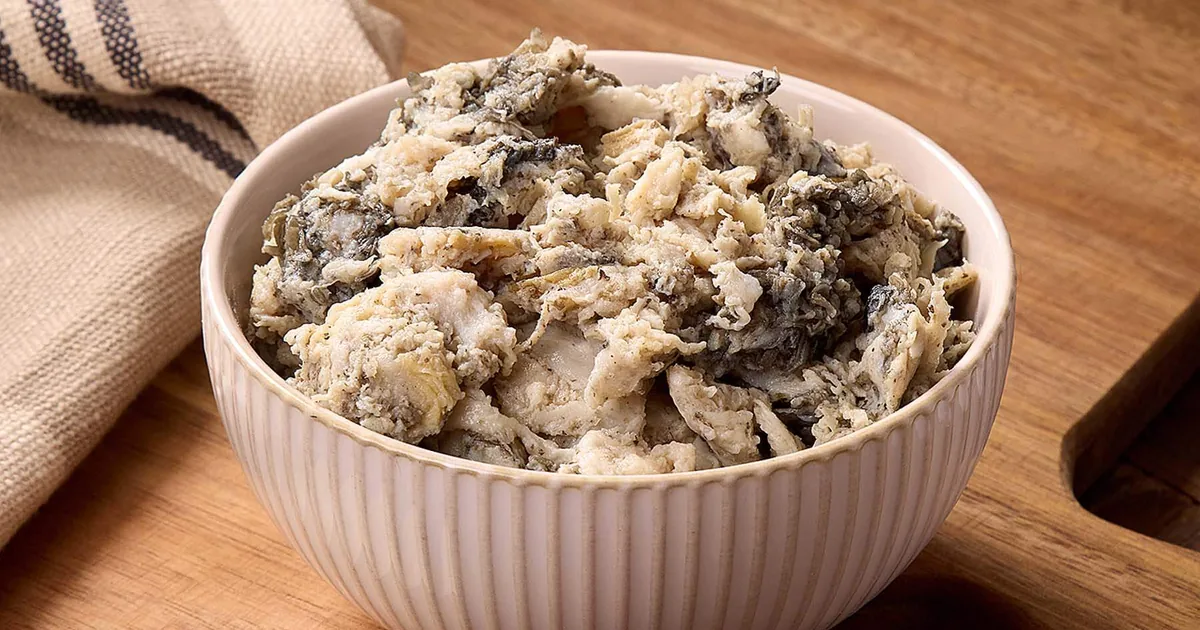
Green tripe is muscle meat in raw feeding, classified in the 80% portion. Its primary nutritional value is manganese: 0.085 mg per 100 g raw (USDA FDC ID 170599), not the gut support it is commonly fed for. NRC 2006 sets the adequate intake for manganese at 1.20 mg per 1,000 kcal for adult dogs; most chicken-forward rotations deliver only 0.4–0.7 mg. The Ca:P ratio is nearly 1:1 (69 mg Ca, 64 mg P per 100 g raw) and zinc is 1.42 mg per 100 g, modest at realistic feeding amounts. Feed 100–200 g two to three times per week for most dogs eating 500–800 g per day.
What Green Tripe Actually Provides: Manganese, Not Probiotics
Raw feeding communities have a word for what green tripe does, and it's "probiotic." Sometimes they say "digestive enzyme source," or "gut flora support." Every description puts it in the same category: something you add when a dog has a stomach problem, or when a breeder on a forum recommends it for coat improvement. The manganese math doesn't come up.
I've watched owners cycle through tripe the same way they cycle through pumpkin or slippery elm — add it for a few weeks when something seems off, see improvement, and move it out of rotation once the presenting issue resolves. That's not how you account for a mineral gap. A dog eating a heavy chicken thigh and beef heart rotation, which is what your typical PMR builder looks like, is probably running low on manganese. The sign of that shortfall isn't hyperkeratosis or coat loss. Sometimes it's nothing visible for months.
NRC 2006 sets the adequate intake for manganese at 1.20 mg per 1,000 kcal for adult dogs. When I run a typical client's chicken-forward rotation, the number comes out between 0.4 and 0.7 — and that's usually with liver twice a week, which most people treat as their mineral insurance. Chicken breast runs 0.01 to 0.02 mg per 100 g. Beef heart is around 0.035 mg per 100 g; owners who count on it as their primary mineral source are sometimes surprised when I show them that figure. Raw green tripe, per USDA data (FDC ID 170599), is 0.085 mg per 100 g. None of those numbers are in the conversation when you're deciding whether to add tripe for gut support.
| Ingredient | Manganese per 100 g raw | Raw feeding classification | Notes |
|---|---|---|---|
| Chicken breast | ~0.015 mg | Muscle meat | Lowest of common rotation proteins |
| Beef heart | ~0.035 mg | Muscle meat | Often over-relied on as mineral insurance |
| Green tripe (raw) | 0.085 mg | Muscle meat | Highest among common rotation proteins |
| NRC 2006 target | — | Adult AI | 1.20 mg per 1,000 kcal ME |
Manganese values from USDA FoodData Central and body prose sourced values. NRC target: National Research Council (2006), Nutrient Requirements of Dogs and Cats, Table 15-1. A typical 600 g daily rotation of chicken thigh and beef heart delivers roughly 0.4–0.7 mg manganese per 1,000 kcal, well below the 1.20 mg AI. Work the figures for the exact rotation you feed rather than assuming a category average holds.
What the mineral math looks like in a real case
A client of mine had a four-year-old Border Collie on a rotation that looked thorough on paper — the kind you'd look at and assume was covered. Multiple proteins, liver twice a week, sardines for EPA coverage, egg three times a week. She'd been asking about a recurring looseness in his left rear gait during long hikes; her working theory was soft tissue, which was plausible. When I ran the full mineral numbers, manganese was sitting at 0.58 mg per 1,000 kcal against the NRC target of 1.20. I noted it without drawing conclusions.
She added 100 g of green tripe three times a week into his existing rotation. His daily total was around 500 g, so nothing was displaced — it slotted in alongside the other proteins. Six weeks later she described the gait looseness as softer, not gone, but measurably different from what she'd been seeing on hikes. Manganese is a structural cofactor for enzymes involved in glycosaminoglycan synthesis, which is part of the matrix cartilage depends on. Establishing mechanism from six weeks of observation isn't possible. I noted the change and kept tracking the rotation.
Green Tripe Nutritional Profile (USDA FoodData Central)
Every value below is per 100 g of raw green tripe, sourced directly from USDA FoodData Central: FDC ID 170599 (Beef, variety meats and by-products, tripe, raw). Every figure here traces back to the USDA's own record, the same source peer-reviewed veterinary nutrition draws on.
| Nutrient | Per 100 g (raw) | Why it matters |
|---|---|---|
| Protein | 12.07 g | Lean muscle-meat protein |
| Fat | 3.69 g | Low fat; low caloric density |
| Calcium | 69 mg | Ca:P nearly 1:1 (see Ca:P section below) |
| Phosphorus | 64 mg | Muscle-meat level; won't skew ratio heavily |
| Potassium | 67 mg | Electrolyte balance |
| Sodium | 97 mg | — |
| Magnesium | 13 mg | — |
| Iron | 0.59 mg | Haem iron; bioavailable |
| Zinc | 1.42 mg | Moderate; not the coat fix it's usually credited as |
| Copper | 0.07 mg | Negligible; liver remains the primary source |
| Manganese | 0.085 mg | Primary nutritional value in rotation context |
| Selenium | 12.5 µg | Antioxidant defence, thyroid |
| Vitamin B12 | 1.39 µg | Red blood cells, nervous system |
| Riboflavin (B2) | 0.064 mg | Energy metabolism |
| Niacin (B3) | 0.881 mg | Energy metabolism |
| Choline | 194.8 mg | Liver and brain function |
| Taurine | ~40 mg | Synthesized from methionine/cysteine in healthy dogs |
| Energy | ~96 kcal | 84% moisture; low caloric density |
Source: USDA FoodData Central, FDC ID 170599 (SR Legacy), per 100 g raw. Taurine estimate from raw-feeding literature; USDA does not track taurine systematically.
One caveat for fat-sensitive dogs: 3.69 g reads as low on the label, but measured against tripe's low calorie count it lands at a moderate share of calories. That distinction matters if you are feeding a dog on a low-fat plan for pancreatitis, where fat is counted per 1,000 kcal rather than per 100 g.
Key Numbers: Green Tripe vs NRC 2006
- Manganese, raw green tripe: 0.085 mg per 100 g (USDA FDC ID 170599)
- NRC 2006 manganese AI (adult dogs): 1.20 mg per 1,000 kcal ME; no safe upper limit established
- Typical chicken-forward rotation: 0.4–0.7 mg per 1,000 kcal (with liver twice weekly)
- Ca:P in green tripe: 69 mg Ca / 64 mg P per 100 g, ratio nearly 1:1, not a calcium supplement
- Zinc in green tripe: 1.42 mg per 100 g vs NRC AI of 15 mg per 1,000 kcal ME
- Energy density: ~96 kcal per 100 g raw; 84% moisture
The Ca:P Story Everyone Cites: What It Actually Tells You
How tripe fits the calcium-phosphorus conversation depends on which framework you're feeding from. BARF and PMR discussions ask about it differently — in BARF it's usually the probiotic story; in PMR the question is about ratios, specifically whether tripe counts toward muscle meat or organ. Muscle meat. USDA data (FDC ID 170599) shows 69 mg calcium and 64 mg phosphorus per 100 g raw, nearly 1:1. That ratio looks balanced, and it is, but at those concentrations it doesn't function as a calcium supplement. When you're tracking the calcium-to-phosphorus picture across your rotation, tripe keeps the phosphorus skew from getting worse. Most people making the bone health argument about tripe are asking more of the ratio than the numbers can support.
Zinc is where the coat improvement attribution usually comes from. The numbers are 1.42 mg per 100 g in green tripe, against an NRC adequate intake of 15 mg per 1,000 kcal ME. At realistic feeding amounts, tripe doesn't move the zinc dial in any meaningful way — liver and beef carry multiples more per gram. If you've been adding tripe specifically for coat improvement and haven't seen that shift, you're probably looking at the wrong variable. Owners who've seen a coat shift after adding tripe tend to credit it; the connection is intuitive but the zinc amounts don't account for it. The manganese case is stronger.
How to Add Green Tripe to a Raw Rotation
There's no published safe upper limit for manganese in dogs — NRC 2006 doesn't establish one, so toxicity isn't the concern. For most dogs eating 500 to 800 g per day, 100 to 200 g two or three times a week is where I'd land. Going higher hasn't been a problem in my experience, but there's not much reason to push it. Feeding it separately or mixing it into an existing meal doesn't seem to matter much.
The caloric density is low enough that adding tripe at that frequency rarely shifts your dog's daily energy intake in any meaningful way — approximately 96 kcal per 100 g raw, given 84% moisture. If you want to confirm the addition doesn't push past maintenance targets for your specific dog, a calorie calculator built around actual body weight and activity gives you that number in a few seconds. Raw & Well runs the same math across your full rotation when you want manganese checked against every other NRC target at once. The smell is the main logistical obstacle most people describe. Those who've fed it regularly tend to solve it the same way: fridge thaw overnight in a sealed container.
Most owners who add tripe for gut support end up keeping it in the rotation for reasons they didn't anticipate.
People Also Ask About Green Tripe for Dogs
Is green tripe good for dogs?
Green tripe is a low-calorie muscle meat that provides 0.085 mg of manganese per 100 g raw, a mineral most chicken-forward raw rotations fall short on. NRC 2006 sets the adequate intake for adult dogs at 1.20 mg per 1,000 kcal; a typical chicken and beef heart rotation often delivers 0.4 to 0.7 mg. Tripe is a practical way to close that gap, though it's usually framed as a gut treatment or coat supplement rather than a manganese source. Our raw feeding ingredients guide explains what each category — muscle meat, organ, and bone — actually delivers per 1,000 kcal.
How much green tripe should I feed my dog?
For most dogs eating 500 to 800 g per day, 100 to 200 g two to three times per week is a reasonable starting point. Green tripe is approximately 96 kcal per 100 g raw, so adding it at that frequency rarely shifts daily energy intake meaningfully. Feed it as part of the muscle-meat portion; it doesn't need to displace other proteins to do its job in the rotation.
What does green tripe do for dogs?
The primary nutritional contribution of green tripe is manganese, a structural cofactor for enzymes involved in glycosaminoglycan synthesis, part of the matrix that cartilage depends on. Its reputation as a probiotic or digestive enzyme source is community-derived rather than supported by controlled data. The Ca:P ratio in tripe is nearly 1:1 (69 mg Ca, 64 mg P per 100 g), which makes it neutral to mildly helpful for mineral balance in a phosphorus-heavy rotation.
Can dogs eat green tripe every day?
Yes, within reason. There's no published safe upper limit for manganese in dogs under NRC 2006, so daily feeding isn't a toxicity concern. The practical constraint is portion size: at high daily amounts, the low caloric density of tripe (96 kcal per 100 g) means displacing other proteins that carry more energy and different micronutrients. Two to three times per week at 100 to 200 g is more practical for most rotations than daily feeding at the same amount.
Frequently Asked Questions
Does green tripe fix a manganese deficiency in dogs?
Adding green tripe increases manganese intake, but whether that closes a gap depends on the full rotation. A chicken-heavy diet can run 0.4 to 0.7 mg of manganese per 1,000 kcal against the NRC 2006 adequate intake of 1.20 mg. Adding 150 g of tripe three times a week into a 600 g daily rotation contributes roughly an additional 0.25 to 0.30 mg per day, which helps, but may not close the gap on its own. If whole-food correction still falls short, see the raw dog food supplement guide for measured next steps. Running the numbers across the whole rotation is the only way to know what's actually needed.
Is green tripe a meaningful calcium source for raw-fed dogs?
Not at typical feeding amounts. USDA FoodData Central (FDC ID 170599) shows 69 mg of calcium per 100 g raw green tripe, nearly matching the 64 mg of phosphorus; Ca:P close to 1:1. At 100 to 200 g a few times per week, tripe contributes very little to the rotation's total calcium. It won't cause a calcium excess, and it won't fix a calcium deficit. Bone content, not tripe, is where the Ca:P ratio work happens.
Why doesn't green tripe improve coat the way owners expect?
The coat improvement story follows zinc, but the zinc in green tripe is 1.42 mg per 100 g, modest compared to NRC 2006's adequate intake of 15 mg per 1,000 kcal ME. Liver and beef muscle carry multiples more zinc per gram. If you've added tripe for coat and seen improvement, the variable is probably something else in the rotation that changed at the same time. The manganese contribution is more mechanistically defensible than the zinc or probiotic claims.
Sources & References
- National Research Council. (2006). Nutrient Requirements of Dogs and Cats. Washington, DC: The National Academies Press. View Publication →
- USDA FoodData Central. Beef, variety meats and by-products, tripe, raw. FDC ID 170599 (SR Legacy). FoodData Central →
- Dobenecker B, Beetz Y, Kienzle E. (2002). A placebo-controlled double-blind study on the effect of nutraceuticals (chondroitin sulfate and mussel extract) in dogs with joint disease as perceived by their owners. Journal of Nutrition, 132(6), 1690S–1691S. DOI →
- Dillitzer N, Becker N, Kienzle E. (2011). Intake of minerals, trace elements and vitamins in bone and raw food rations in adult dogs. British Journal of Nutrition, 106(S1), S190–S192. DOI →