
Last Updated: June 14, 2026 – By Dr. Sarah Missaoui, DVM
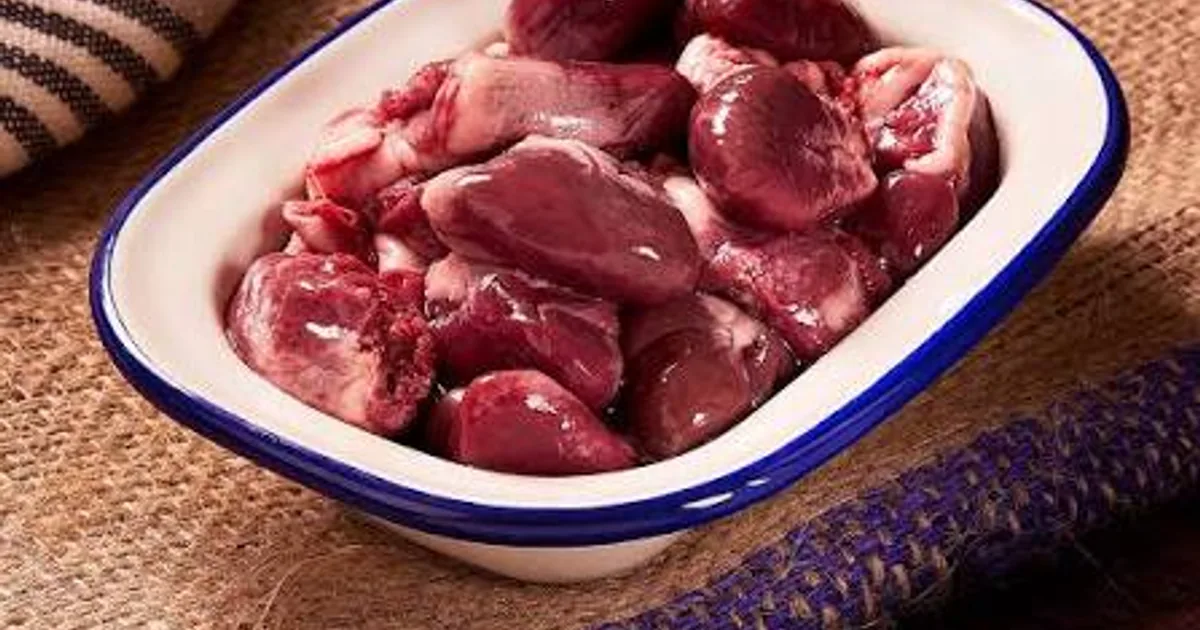
Beef heart is muscle meat, not organ, so it belongs in the 80% muscle portion of a raw diet rather than the 10% organ allowance. A 100 g serving supplies roughly 65 mg of taurine (about five times ground beef), but it carries little of the vitamin A or copper that liver provides. Feed heart at around 10–15% of the muscle portion and keep the organ 10% for liver and a second secreting organ.
Is Beef Heart a Muscle Meat or an Organ?
What the raw feeding world gets wrong about beef heart isn't whether to feed it, it's the word it gets filed under, because heart almost always lands in the organ column instead of the muscle one. It gets slotted in beside liver and kidney, treated as one of the secreting organs that the 80/10/10 model caps at ten percent of the bowl. The label feels right, because heart is dark and dense and rich, and rich tends to mean organ in this corner of the internet.
It isn't an organ, though. Heart is muscle, a pump built from the same striated tissue as a roast, just worked harder every second of its life. When you file it under the organ heading you do two things at once. You overcount what heart actually provides, and you quietly crowd out the organs that carry the load heart was never built to carry. The second half of that is the part nobody flags.
Key Numbers: Beef Heart vs NRC 2006
- Taurine, raw beef heart: ~65 mg per 100 g (about 13 mg in the same weight of ground beef)
- Taurine status: NRC 2006 does not list taurine as essential for dogs – healthy dogs synthesize it from methionine and cysteine
- Methionine + cystine RA (adult): 2.6 g per 1,000 kcal ME
- Vitamin A RA (adult): 379 µg RAE per 1,000 kcal ME – liver is the main raw source, not heart
- Copper RA (adult): 1.5 mg per 1,000 kcal ME – again a liver job, not a heart job
Muscle meat that got mistaken for an organ
The reason heart picked up its organ reputation is taurine. A 100-gram serving of raw beef heart runs around 65 milligrams of taurine, against roughly 13 milligrams in the same weight of ground beef, which is a real difference and worth having. But NRC 2006 doesn't list taurine as an essential nutrient for dogs at all, because a healthy dog makes its own from methionine and cysteine, and the combined recommended allowance for those two amino acids sits at 2.6 grams per 1,000 kcal. Heart helps a dog reach that. What it cannot do is stand in for liver.
| Cut | Raw feeding classification | Taurine (per 100 g) | Vitamin A & copper density | Where it counts in 80/10/10 |
|---|---|---|---|---|
| Beef heart | Muscle meat (often miscounted as organ) | ~65 mg | Low vitamin A, modest copper | 80% muscle portion |
| Beef liver | Secreting organ | Low | Very high vitamin A, high copper | Organ 10% (about 5%) |
| Beef kidney | Secreting organ | Low–moderate | Moderate; strong selenium and B12 | Organ 10% (second organ) |
| Plain muscle (e.g. chuck) | Muscle meat | ~13 mg | Negligible vitamin A and copper | 80% muscle portion |
Estimates from USDA FoodData Central ingredient values and NRC 2006 reference ranges. Actual delivery varies with cut, source, and portion consistency – calculate your specific recipe rather than estimating from category averages.
Beef Heart Nutritional Profile (USDA FoodData Central)
Every value below is per 100 g of raw beef heart, sourced directly from USDA FoodData Central – FDC ID 168625 (Beef, variety meats and by-products, heart, raw). Each number is auditable against the official USDA record – the same database used in peer-reviewed veterinary nutrition.
| Nutrient | Per 100 g (raw) | Why it matters |
|---|---|---|
| Protein | 17.7 g | Lean muscle-meat protein |
| Fat | 3.9 g | Leaner than most muscle cuts |
| Phosphorus | 212 mg | Balanced against calcium (Ca:P) |
| Iron | 4.3 mg | Highly bioavailable haem iron |
| Zinc | 1.7 mg | Skin, coat, immune function |
| Copper | 0.40 mg | Modest – liver remains the primary source |
| Selenium | 21.8 µg | Antioxidant defence, thyroid |
| Vitamin B12 | 8.55 µg | Red blood cells, nervous system |
| Riboflavin (B2) | 0.91 mg | Energy metabolism |
| Niacin (B3) | 7.5 mg | Energy metabolism |
| Choline | 220 mg | Liver and brain function |
Source: USDA FoodData Central, FDC ID 168625 (SR Legacy), per 100 g raw. Taurine (~65 mg/100 g, noted above) comes from raw-feeding literature – USDA does not track taurine. Calcium is negligible in boneless heart.
What the Organ Label Quietly Costs the Bowl
I had a Boxer come through last spring whose owner had been building a careful bowl for almost two years. She counted beef heart as her organ ten percent, heart was the organ, end of discussion, and actual liver showed up maybe twice a month, framed as a treat. When I ran her recipe through the numbers, protein and taurine looked excellent. Vitamin A was where it fell apart. Real liver had nearly disappeared from the rotation, and the bowl's main source of vitamin A went with it. Intake was sitting well under the NRC adult target of 379 micrograms RAE per 1,000 kcal. Copper read the same way. Nothing in that bowl looked wrong from the outside. The heart was doing its job. And it was never going to do liver's.
I treat that gap as a budgeting problem more than a sourcing one. The organ slot in 80/10/10 is small to begin with, ten percent of intake, and roughly half of that is meant to be liver specifically. Once heart moves in, it eats the room liver needed. Heart's micronutrient profile is really muscle-meat-plus: more taurine, more CoQ10, more B12 and iron than a plain steak carries, but nowhere close to the vitamin A, copper, or folate you get per gram from liver or kidney. Copper makes the contrast obvious. NRC 2006 puts the adult recommended allowance at 1.5 milligrams per 1,000 kcal, and gram for gram, heart contributes a small fraction of what liver does toward that number.
Part of why heart gets over-promoted is the taurine scare from a few years back, when grain-free diets got linked to dilated cardiomyopathy and taurine became the nutrient everyone wanted to load up on. Heart is a clean way to add it, and for the breeds with a known predisposition, Dobermans, Boxers, Cocker Spaniels, that instinct isn't wrong. Somewhere it hardened into a habit of treating heart as the answer to a question most dogs aren't actually asking, while the everyday organ nutrients went quiet in the background.
Where Beef Heart Belongs in the Bowl
Feed heart as what it is, and the arithmetic mostly sorts itself out. It belongs in the 80 percent muscle portion, where you can run it as a rotating share of the meat rather than a competitor to the organs. Plenty of people fold in something like ten to fifteen percent of the muscle meat as heart and never look back. The organ ten percent stays free for liver and a second secreting organ, the way the model was meant to work in the first place.
Richness is the one real catch. Heart is leaner than a lot of cuts but still dense, and some dogs hit loose stool once it climbs past five percent or so of the total bowl. You introduce it the way you'd introduce anything, small, then more, watching the stool rather than the spreadsheet. A dog who does fine on a spoonful can move up; a dog who doesn't, won't, and the number on the recipe matters less than what shows up in the yard the next morning.
Sourcing is part of the story too. Heart is one of the cheaper organs by weight, easy for you to buy in bulk and easy to portion, which is exactly why it ends up over-represented in so many bowls. I'd trim the obvious hard fat and connective tissue off the top if your dog is sensitive, cube it to a size that matches the dog, and weigh it like any other muscle meat instead of eyeballing it as the organ for the week.
None of this makes heart less useful. I reach for it constantly. It is one of the better muscle meats a raw feeder can put in a bowl, and the taurine, the CoQ10, the B vitamins are all genuinely there. Nobody went wrong by feeding it. The mistake was the column it got filed under, and what quietly fell out of the bowl to make room for it. Heart won't close a manganese gap either — for that mineral, green tripe carries more per gram in the muscle rotation. For a full breakdown of what each ingredient category delivers against NRC 2006 targets, see our raw feeding ingredients guide.
Whether your dog is actually short on anything isn't something you can read off the bowl by looking at it. It comes down to which slot the heart went into when you first built the recipe, and whether liver ever made it back in.
How to Move Beef Heart Into the Right Column
Rebalancing a bowl that has been counting heart as organ is less work than it sounds. You don't drop the heart, you just move it and refill what it displaced.
Step 1: Reclassify heart as muscle meat
Move beef heart out of the organ allowance and into the 80% muscle portion. A normal landing spot is roughly ten to fifteen percent of the muscle meat, rotated with other cuts. The taurine you valued does not go anywhere – it just stops occupying liver's seat.
How Raw & Well handles it: tag heart as muscle meat and the calculator keeps it out of the organ math automatically.
Step 2: Refill the organ 10% with liver
Put real liver back at around five percent of intake and add a second secreting organ – kidney or spleen – for the rest of the organ allowance. This is the portion that actually carries vitamin A and copper.
The Raw & Well solution: the app flags an under-fed organ portion against NRC 2006 targets so the gap is visible before it becomes a deficiency.
Step 3: Recalculate vitamin A and copper
After the swap, recheck vitamin A, copper, and the Ca:P ratio against NRC 2006 per-1,000-kcal targets, and confirm the change lands as a share of your dog's daily calories, not just by eye.
How Raw & Well automates this: any ingredient change recalculates the full micronutrient profile at once, so you can see whether moving heart fixed the vitamin A gap without opening a new one.
People Also Ask About Beef Heart for Dogs
Is beef heart a muscle meat or an organ for dogs?
Beef heart is muscle meat. It is a muscular organ anatomically, but in raw feeding it is fed as muscle meat and belongs in the 80% muscle portion, not the 10% secreting-organ allowance reserved for liver, kidney, and spleen. Counting it as organ tends to displace liver and the vitamin A it provides.
How much beef heart can I feed my dog?
Feed beef heart at roughly 10 to 15 percent of the muscle-meat portion of the diet, which lands near 5 to 10 percent of total intake for most dogs. Because heart is rich, introduce it gradually and watch the stool; some dogs loosen up past about five percent of the bowl and need a slower build.
Is raw beef heart good for dogs?
Yes. Raw beef heart is one of the better muscle meats for dogs, supplying taurine, CoQ10, B12, and iron at higher levels than plain muscle cuts. The caveat is classification, not safety: keep it in the muscle portion so it adds to the diet without crowding out the liver and kidney the organ allowance is meant to cover.
Can dogs eat too much beef heart?
Yes, in two ways. Fed too heavily, its richness can cause loose stool, and used as a stand-in for the organ portion, it leaves vitamin A and copper short because heart carries little of either compared to liver. Keeping heart in the muscle share and capping it around 10 to 15 percent of that portion avoids both problems.
Frequently Asked Questions
Does beef heart provide enough taurine to prevent DCM?
Beef heart is taurine-rich, but NRC 2006 does not classify taurine as essential for dogs because a healthy dog synthesizes its own from methionine and cysteine. Heart can support taurine status; it is not a treatment for dilated cardiomyopathy. A dog with a diagnosed or breed-linked taurine concern should be managed with your veterinarian, not heart alone.
Is beef heart safe for dogs with pancreatitis or a sensitive stomach?
Beef heart is leaner than many cuts but still rich, and some dogs loosen up past about five percent of the bowl. For a dog with pancreatitis or a sensitive gut, introduce it in small measured amounts, trim visible fat, and watch the stool before increasing.
Can puppies eat beef heart?
Yes, as part of the muscle-meat portion. Puppies have higher per-energy requirements for several nutrients, so the same rule applies more strictly: heart belongs in the muscle share, and the organ allowance still needs real liver to cover vitamin A and copper at growth targets.
Sources & References
- National Research Council. (2006). Nutrient Requirements of Dogs and Cats. Washington, DC: The National Academies Press. View Publication →
- USDA FoodData Central. Beef variety meats and by-products, heart, raw (taurine and nutrient values). FoodData Central →
- Dillitzer N, Becker N, Kienzle E. (2011). Intake of minerals, trace elements and vitamins in bone and raw food rations in adult dogs. British Journal of Nutrition, 106(S1), S190–S192. DOI →
- Spitze AR, Wong DL, Rogers QR, Fascetti AJ. (2003). Taurine concentrations in animal feed ingredients. Journal of Animal Physiology and Animal Nutrition, 87(7-8), 251–262. DOI →